Introduction
"Static" can mean two very different things in pressure-care equipment. It may refer to a standalone static air mattress—air-filled cells held at a steady pressure. Or it may mean static mode on a powered alternating-pressure system, which pauses the cycle and holds every cell at one level.
Mixing those up leads to the wrong surface for the patient. For people who spend most of the day in bed, that choice affects skin integrity, moisture control, comfort, and how often caregivers must turn and check skin.
This guide explains what a static air mattress is, how it works, and how it compares with alternating-pressure systems. It also covers what facilities and caregivers should verify before buying, plus safety and maintenance basics that apply to either surface.
Key Takeaways
- Static air mattresses use steady-pressure air cells to redistribute body weight, unlike cycling alternating-pressure systems.
- Patient mobility, skin condition, and repositioning ability should drive selection, not just product features.
- "Static mode" on a powered mattress is not the same as a dedicated static air mattress.
- Pressure-injury prevention decisions belong with a qualified healthcare professional, not a spec sheet.
What Is a Static Air Mattress?
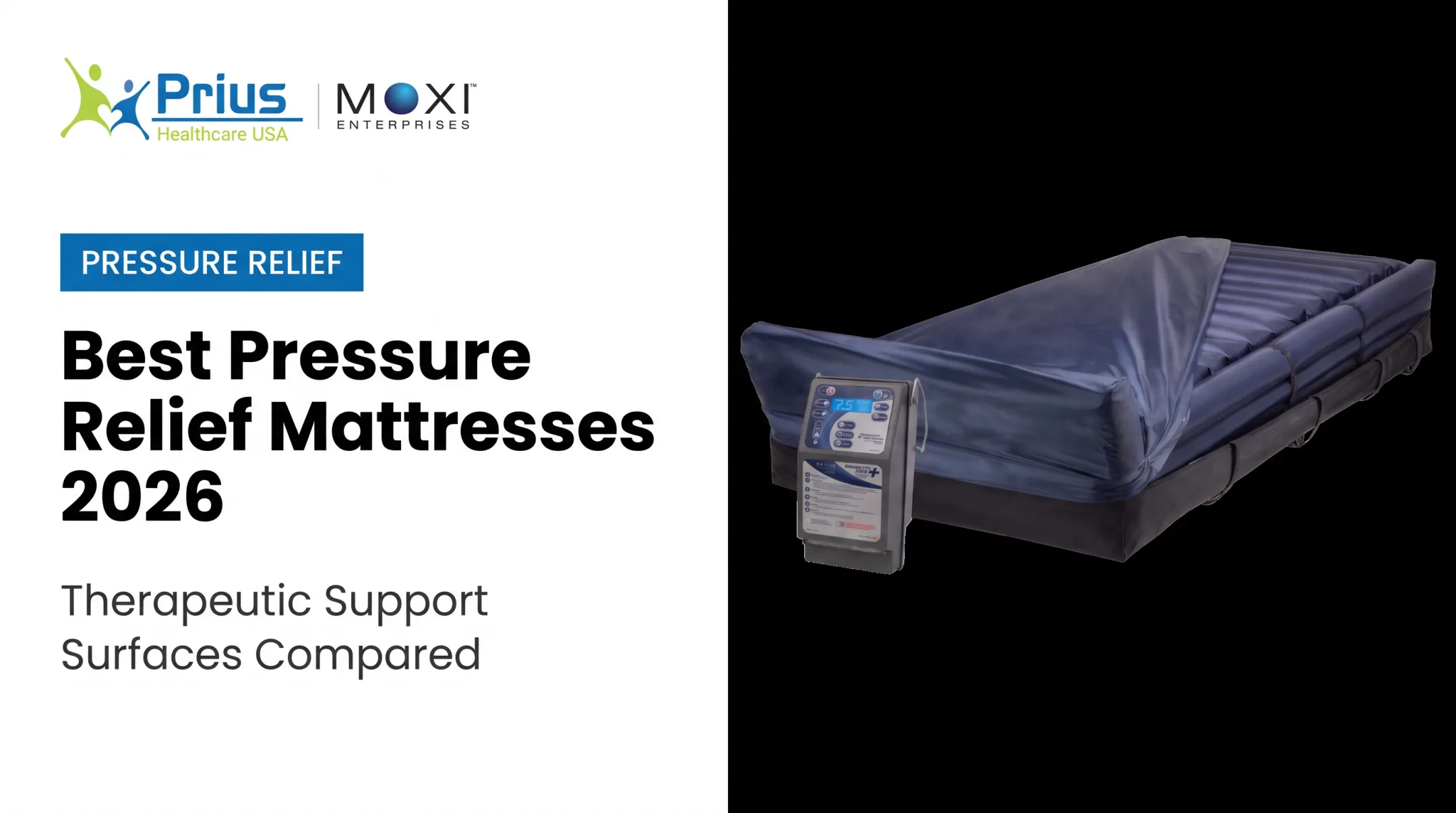
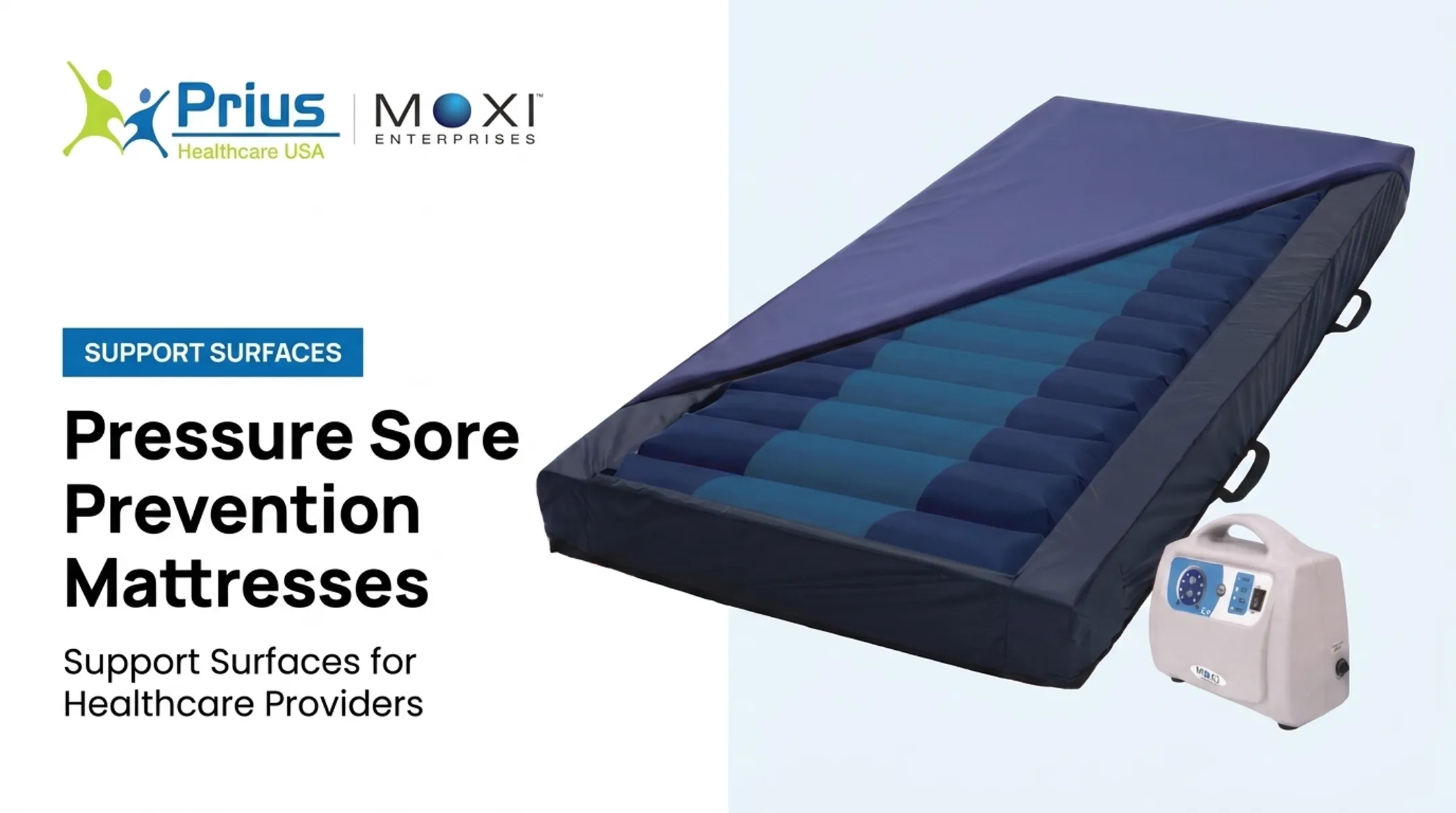
A static air mattress is a support surface built from air-filled cells or chambers that hold a steady, non-cycling pressure. Instead of pumping air in and out of sections on a timer, the cells stay inflated and let the surface conform to the person lying on it. That conforming action spreads body weight across a wider area, easing concentrated load on bony spots like the heels, sacrum, and shoulder blades.
Reactive vs. Active Support Surfaces
Clinically, this falls under what the National Pressure Injury Advisory Panel calls a "reactive" surface: one that changes its pressure-redistribution properties only in response to applied load. NPIAP's own definitions note that a reactive surface can be powered or nonpowered; a pump's presence doesn't determine the category.
An "active" surface changes its properties independently of load, which is how alternating-pressure systems are classified.
This distinguishes a static air mattress from:
- A standard foam mattress: no air cells, no adjustable pressure.
- A static foam or gel surface: cushions the body but doesn't move air to redistribute load the same way.
- An alternating-pressure mattress: cycles cell groups up and down on a timer.
- A low-air-loss system: circulates air primarily for moisture and temperature control, often alongside pressure redistribution.
Standalone Mattress or a Mode on a Powered System?
Confusion often starts here. Many powered mattresses include a "static" setting that simply pauses the alternating cycle, inflating every cell to the same pressure. The Enhance RDX, for instance, holds all 18 of its air cells at one pressure when a caregiver activates static mode, typically for repositioning, not as its everyday therapy setting.
That's different from a standalone static air mattress, like the MOXI Fusion XC, which is built from the ground up to redistribute pressure through communicating air-and-foam chambers without a powered pump.
Both approaches rely on the same physics: immersion (how deeply the body sinks in) and envelopment (how well the surface wraps around body contours). A heel resting on a firm mattress concentrates weight into a small area; that same heel sinking into a conforming air chamber spreads the load out, which is the basic goal of pressure redistribution.

How Static Air Mattresses Work and What They Can Offer
Construction and Components
Most static air mattresses share a similar build, though specifics vary by manufacturer, so always confirm details against the chosen product's documentation. Typical components include:
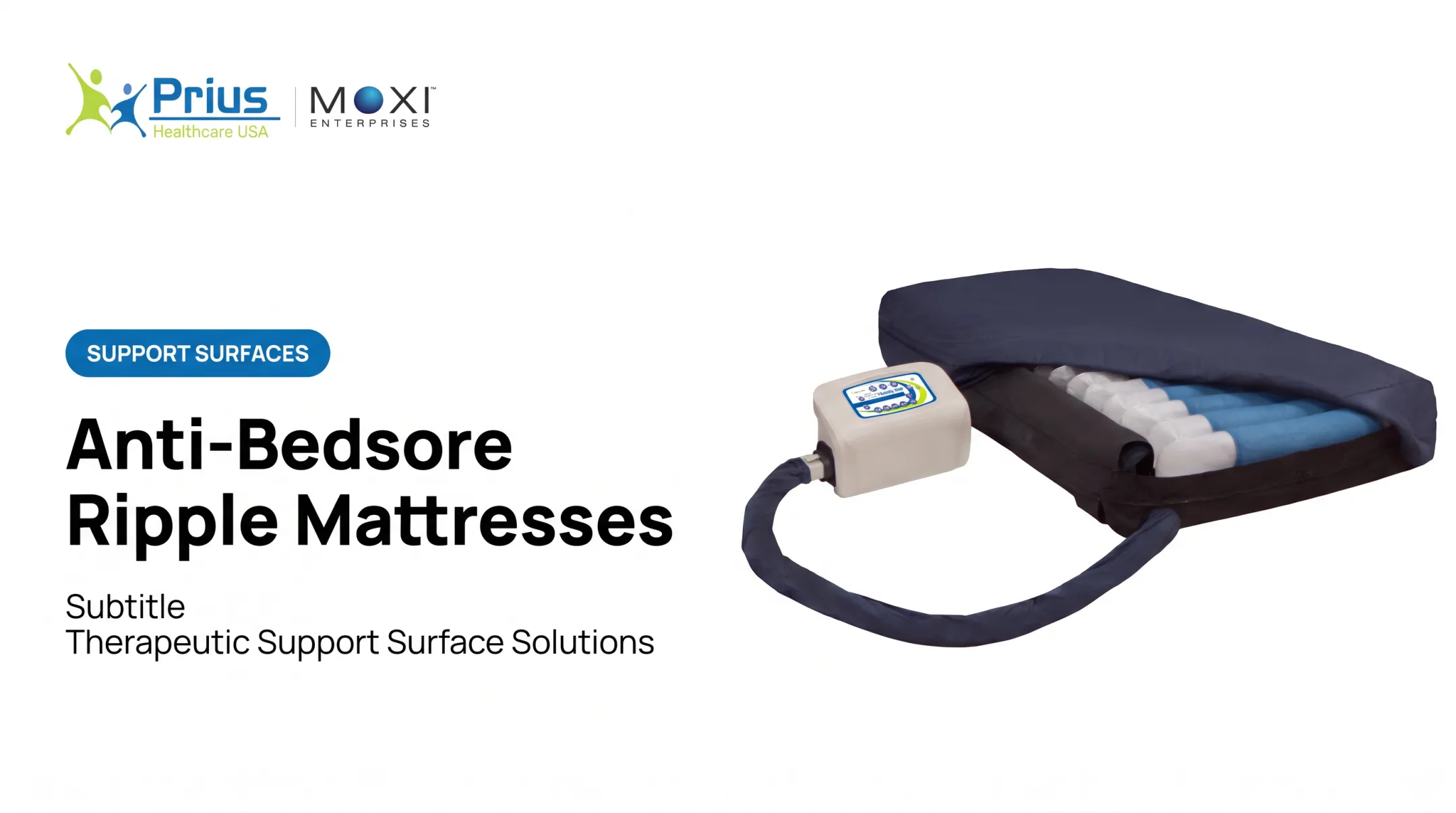
- Air cells or bladders, arranged side by side or in a cell-in-cell design with a fixed volume of air.
- A cover, often vapor-permeable and treated for friction and moisture resistance, sometimes with a separate lining underneath for infection control.
- Valves, including inflation ports and, on many clinical products, a dedicated CPR valve for rapid deflation in an emergency.
- An inflation system, either a manual pump for simple overlays or an electric pump for larger replacement mattresses.
The Enhance RDX mattress system uses an 8-inch air bladder built in a cell-in-cell design: roughly 4.5 inches of therapy air layered over 3.5 inches of static air for baseline support. That layered approach is one way manufacturers balance conforming comfort with a stable base.
Benefits Worth Considering
Stable, non-cycling support offers a few practical advantages:
- Consistent feel: no shifting sensation, which matters for patients sensitive to motion.
- Quiet operation: non-powered designs run without a pump cycling on and off.
- Simpler operation: fewer settings to manage than a programmed alternating cycle.
- Easier transfers: some powered systems switch to a firmer static mode specifically to simplify repositioning.
Where Static Air Falls Short
No support surface solves everything. Static air mattresses carry real limitations:
- Incorrect inflation can leave the surface too soft (bottoming out) or too firm to conform properly.
- Air leakage from a damaged cell or loose valve reduces support over time.
- Sizing mismatches between mattress and bed frame create gaps or instability.
- Skipped repositioning still leaves risk on the table; comfort does not replace a repositioning schedule when one is part of the care plan.
Heat, perspiration, and incontinence affect skin health regardless of mattress type. A breathable cover helps manage microclimate, but caregivers still need to inspect skin regularly, address moisture promptly, and watch for friction and shear during transfers.
A static air mattress can support prevention efforts, but it isn't a substitute for hands-on care or a treatment plan for an existing wound.
Static Air vs. Alternating-Pressure Mattresses
How the Two Systems Differ
An alternating-pressure mattress uses a pump to inflate and deflate groups of cells in a programmed cycle, so different areas bear the patient's weight at different times. A static air mattress keeps its cells at one pressure and relies on immersion and envelopment instead of movement.
Power matters here. Alternating systems need continuous electricity to cycle; a power interruption stops the process, though some designs—such as the MOXI eMotion—hold air in a separate static layer so the surface doesn't collapse.
Standalone static air mattresses, especially nonpowered ones, don't depend on electricity at all. That reliability matters during a home power outage or for facilities managing equipment uptime.
Patient Experience and Caregiver Handling
Patients react differently to each system:
- Static support feels stable and predictable for people who find cycling motion disorienting
- Alternating pressure redistributes load automatically and can reduce repositioning workload
- Pump noise is the tradeoff in many alternating setups
Multi-mode platforms such as Rhythm Multi Plus combine static, pulsation, and alternation on one surface, so settings can match patient tolerance and clinical need.
Comparing the Evidence
Research comparing outcomes between static and alternating air is limited. A 2021 Cochrane review pooling six randomized trials found a favorable trend for reactive (static) air over active alternating air but rated the overall evidence "very low certainty." Neither category has been proven universally superior for preventing pressure injuries. Selection should reflect the patient's mobility, skin condition, wound status, and moisture concerns, not marketing claims.
| Factor | Static Air | Alternating Pressure |
|---|---|---|
| Therapy approach | Stable, non-cycling support | Programmed inflate/deflate cycle |
| Electricity | Often optional (nonpowered designs exist) | Required for cycling |
| Noise | Generally quiet | Pump cycling audible |
| Maintenance | Cell and valve checks, cover care | Pump servicing plus cell and valve checks |
| Likely use case | Motion-sensitive patients, stable skin | Higher-risk patients needing automated redistribution |
| Key limitation | No active movement of load | Depends on continuous power |
Adjust pressure levels, alternating cycles, or static settings only per the manufacturer's instructions and the patient's care plan—changes outside those guidelines can weaken pressure redistribution or create new risk.

Choosing a Static Air Mattress
Decision Checklist
Before purchasing, DME/HME dealers, facilities, and caregivers should confirm:
- User weight and dimensions against rated capacity (some replacement mattresses support up to 1,000 lbs, while smaller overlays top out around 300 lbs).
- Bed-frame compatibility, including width, length, and rail height.
- Mattress height, which affects transfer ease and fall risk.
- Cover durability and cleaning requirements suited to the setting (home, facility, or rental fleet).
- Warranty terms and replacement-part availability, especially for air cells and covers.
Matching the Mattress to the Care Setting
Home care, hospice, skilled nursing, hospital, VA, and rental fleet environments each place different demands on equipment.
- Rental fleets need mattresses that survive repeated transport, disinfection, and redeployment across many patients.
- Home hospice prioritizes quiet operation and simple controls for family caregivers.
- VA and skilled nursing facilities need clear documentation for cleaning and inspection between residents.
Before You Buy
Once the care setting is clear, confirm these details directly with the manufacturer or supplier:
- Weight capacity matches the patient population you serve.
- Inflation method (manual, powered, or hybrid) fits your care environment.
- CPR or emergency-deflation features are present where clinically relevant.
- Side-rail compatibility and fall-risk factors have been reviewed.
- Required accessories, like pumps or covers, are included or sourced separately.
Facilities and HME/DME dealers evaluating support-surface options can talk to Prius Healthcare USA or its U.S. distributor network about equipment compatibility, service support, and maintenance needs for specialty mattress systems.
Care, Safety, and Procurement Considerations
Routine Checks and Cleaning
Regular inspection catches problems before they affect patient care. Check for:
- Visible damage, cuts, or stains on the cover
- Air loss or slow leaks between inflation cycles
- Valve security and CPR valve function
- Correct inflation level for the patient's weight
- Cleanliness issues or signs the surface no longer supports properly
The CDC's environmental cleaning guidance lists patient mattresses among surfaces that need cleaning and disinfection between occupants, following the manufacturer's written instructions. Prius Healthcare USA's warranty terms, for example, call for internal and external mattress parts to be inspected at least every three months, with damaged parts replaced immediately or the unit taken out of service.
Caregiver Practices That Don't Change
No mattress replaces good care fundamentals. Regardless of surface type, caregivers should still:
- Reposition patients according to the documented care plan
- Protect heels and other bony prominences
- Manage moisture from perspiration or incontinence promptly
- Inspect skin regularly for new redness or breakdown
- Use safe transfer technique to limit friction and shear
What to Ask Your Supplier
Before finalizing a purchase, confirm:
- Training and user instructions
- Warranty terms
- Authorized technician dispatch
- Replacement covers or air cells
- Support during equipment downtime
Prius Healthcare USA works through its U.S. distributor and dealer network to help facilities with equipment compatibility questions and authorized technician dispatch when service is needed.
A static air mattress can deliver stable pressure redistribution when it matches the patient. Base the final choice on clinical assessment, verified specifications, and the care plan that continues after installation.
Frequently Asked Questions
Is a sprung mattress good for back pain?
Sprung mattresses fall outside the scope of static air support surfaces. Suitability for back pain depends on the individual's spinal condition, firmness preference, and guidance from a qualified healthcare professional.
What is the best mattress for temperature regulation?
Temperature regulation depends on mattress construction, cover breathability, airflow, and patient needs. For static air surfaces, prioritize breathable covers and designs that manage heat and moisture in the care setting.
What is a static air mattress?
A static air mattress is an air-filled support surface that holds steady, non-alternating pressure while redistributing body weight. It differs from alternating-pressure systems that cycle cells and from static foam surfaces with no air cells.
What does static mean on an air mattress?
It means the air cells stay at a consistent pressure instead of cycling between inflation and deflation. Exact behavior varies by model, so confirm specifics in the product's user manual.
How is a static air mattress different from an alternating-pressure mattress?
Static air holds steady support; alternating pressure cycles cell groups on a timer. They differ in power needs, patient sensation, and maintenance, so the right pick depends on clinical and caregiving needs.
How do you maintain and clean a static air mattress?
Follow the manufacturer's cleaning instructions, inspect regularly for leaks or damage, use approved disinfectants, and confirm inflation and cover integrity. Document cleaning between users in shared or rental settings.