Introduction
A spinal cord injury changes nearly everything about how a person rests, breathes, and heals. Many patients and caregivers face months of bed-based care: repositioning every few hours, watching for early skin damage, and managing secretions. Those tasks matter because missed steps can derail recovery.
An estimated 311,560 people are living with traumatic SCI in the United States, according to the National Spinal Cord Injury Statistical Center.
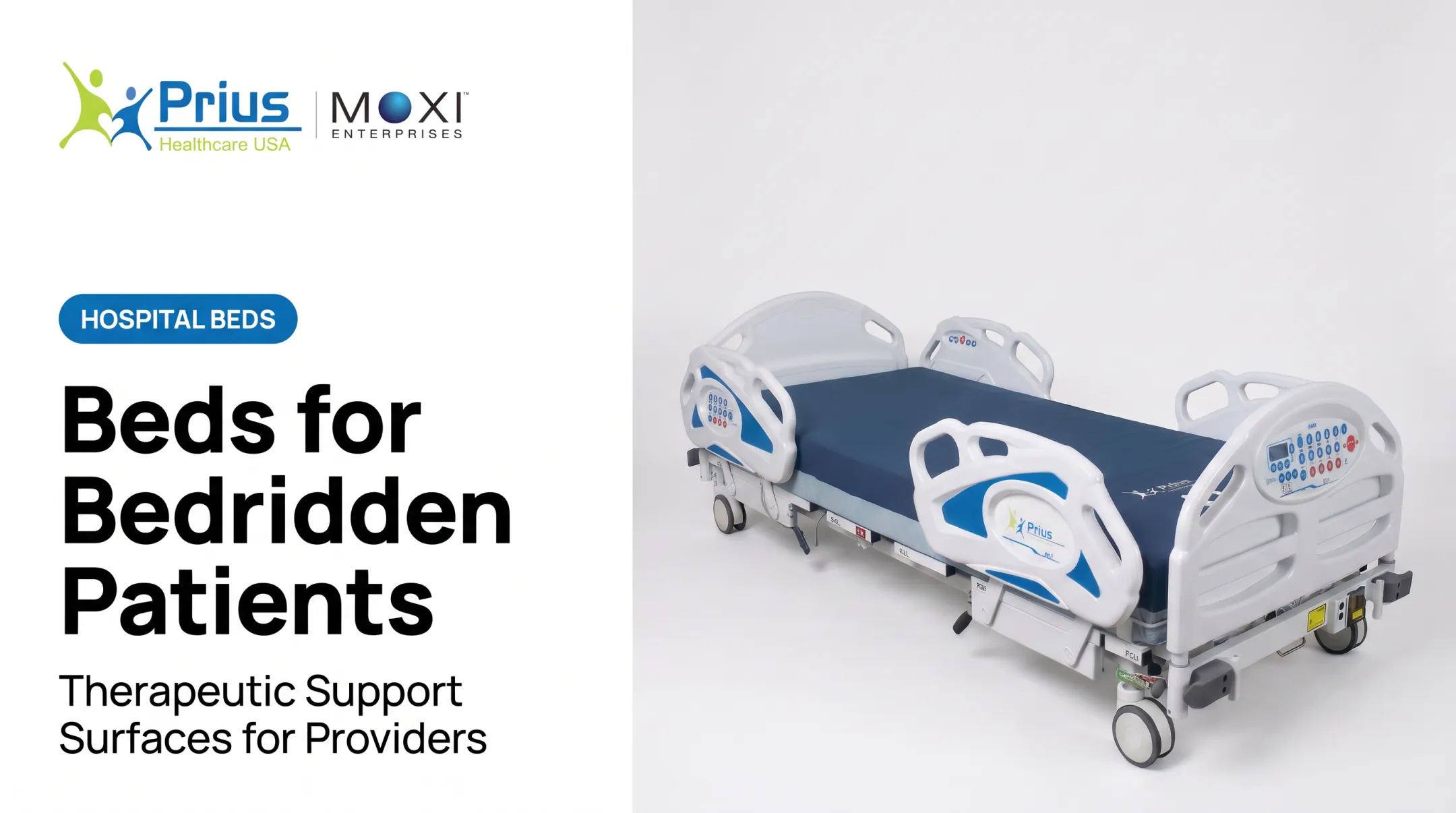
A rotating hospital bed uses controlled lateral rotation, tilting the mattress platform side to side to shift a patient's position. That's different from a standard adjustable hospital bed, which only raises or lowers the head and knee sections.
Rotation helps some patients. It isn't right for everyone. The right call depends on injury stability, skin condition, respiratory status, transfer needs, and guidance from the treating clinical team. This guide explains how rotating beds work, where they help in SCI care, and which clinical factors should shape the decision.
Key Takeaways
- Rotation can ease repositioning, but it never replaces skin checks, pressure relief, transfers, or monitoring
- Judge the full system—controls, mattress fit, safety features, weight capacity, cleaning, and service support
- Get clinician approval first for acute injury, spinal instability, recent surgery, fractures, or complex autonomic/respiratory risk
- Match the bed and surface to the care plan, not the other way around
How Rotating Hospital Beds May Help With Spinal Cord Injury Care
Why Positioning Becomes Harder After SCI
Paralysis, reduced sensation, and spasticity make it difficult for many people with SCI to shift their weight or notice early skin damage. Someone with intact sensation feels discomfort and moves before tissue is harmed. That built-in warning system is often gone after injury.
Pressure injuries follow as a result. A meta-analysis covering 82,722 people with SCI across 29 studies found a pooled pressure-injury incidence of 23% (systematic review, 2020). That figure isn't a prediction for any one patient, but it explains why positioning support matters so much in SCI care.
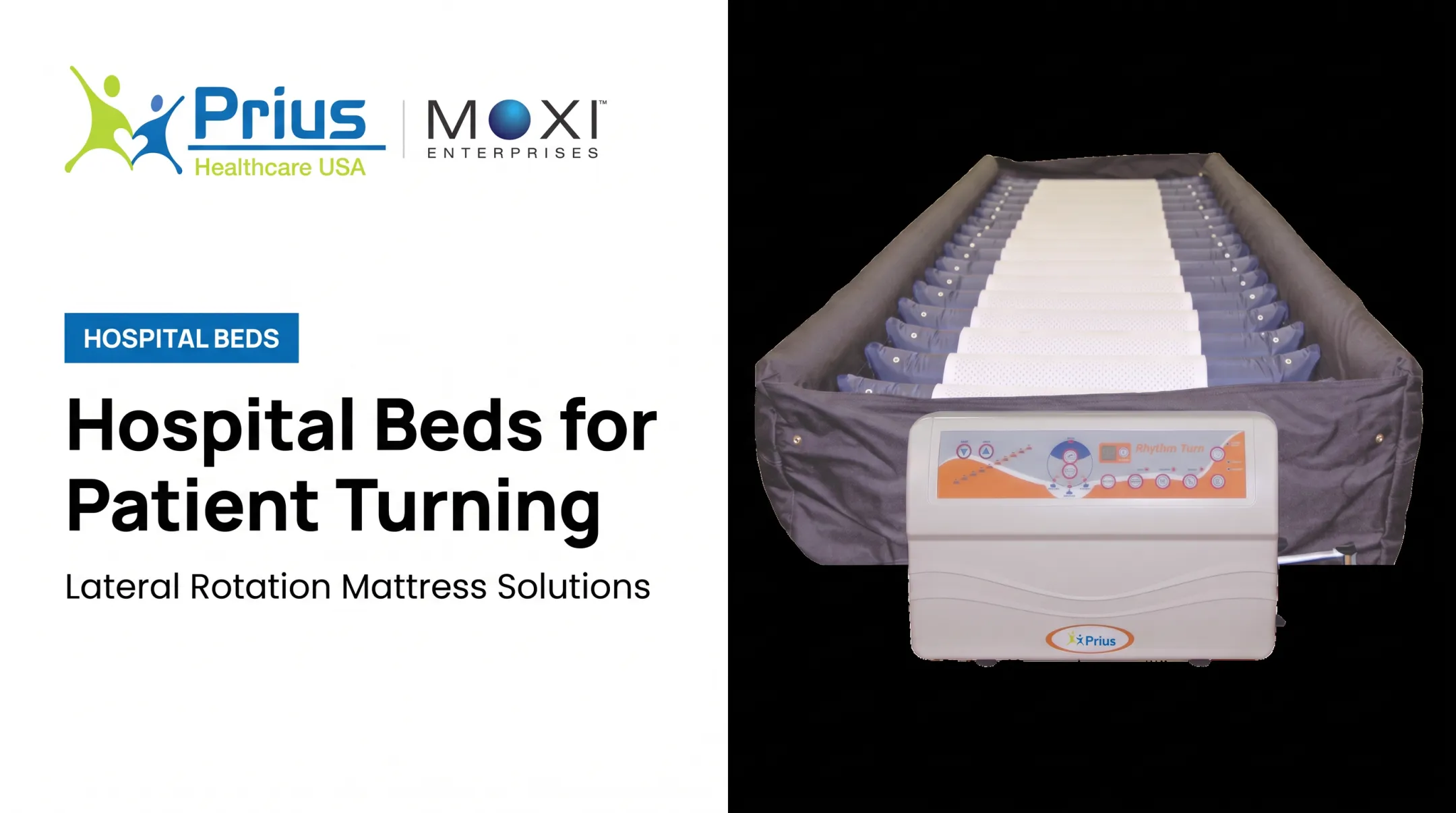
Lateral rotation can shift the body and redistribute pressure across contact points. Rhythm Turn, a mattress replacement system distributed by Prius Healthcare USA, supports that approach with adjustable turn settings:
- 20° or 40° rotation
- Left-turn, right-turn, or full-turn modes
- Cycle times from 3 to 95 minutes
Whether that translates into fewer pressure injuries for a specific patient depends on the mattress, the positioning plan, the rotation settings, and how well the patient tolerates movement.
Easing the Physical Load on Caregivers
Turning a person manually every two hours, day and night, takes a real physical toll. Controlled rotation may reduce some of the lifting, pulling, and bending caregivers do during routine repositioning.
It doesn't eliminate the need for safe patient-handling training, though. Caregivers still need to know how to check skin, manage lines, and respond if something looks wrong mid-turn.
Respiratory and Secretion Considerations
Immobility raises the risk of pooled secretions and lung complications, which is why some clinicians consider continuous lateral rotation therapy for secretion management.
A 2024 systematic review of 18 studies and 1,466 mechanically ventilated adults found continuous lateral rotation was associated with less nosocomial pneumonia, but showed no significant reduction in mortality (systematic review, 2024).
That evidence comes from critically ill ventilated patients broadly, not an SCI-specific population. Treat rotation as a possible aid to secretion mobilization, not a substitute for respiratory therapy or a guarantee against pneumonia.

Part of a Larger Prevention Plan
Rotation works alongside, not instead of:
- Regular skin inspections and moisture management
- Adequate nutrition and hydration
- Correct support-surface selection
- Wheelchair pressure management
- Repositioning intervals set by the clinical team
For people with incomplete injuries or preserved upper-body function, rotation may support comfort and participation in daily activities. It shouldn't be framed as a way to restore movement or guarantee independence.
Features to Evaluate Before Choosing a Rotating Hospital Bed
Not every "rotating" or "adjustable" feature does the same job. Confusing them leads to the wrong purchase.
| Function | What It Does |
|---|---|
| Continuous lateral rotation | Automated, ongoing side-to-side turning |
| Programmed turning | Preset cycles at set angles and intervals |
| Manual-assisted rotation | Caregiver-triggered position change |
| Head-of-bed elevation | Raises the head section only |
| Knee articulation | Bends the knee section |
| Trendelenburg/reverse | Tilts the entire bed head-down or foot-down |
| Height adjustment | Raises or lowers the whole frame |
Rotation Controls Worth Checking
Ask these questions before you choose a system:
- Range of motion — Can angles be set independently? (Rhythm Turn: 20° or 40°)
- Cycle programming — How fine are the intervals? (Rhythm Turn: 3 to 95 minutes)
- Pause / hold — Can rotation stop safely during care tasks?
- Auto Firm (or equivalent) — Does inflation max quickly for transfers?
- Manual override and emergency stop — Available at the bedside?
- Alerts — Audible from the hallway, not only at the bed?
Knee articulation depth also matters in daily care; Rhythm Turn's gatch adjusts 0°–35°.
Matching the Bed to the Patient
Patient fit decides whether the system works day to day:
- Body size and weight capacity — Mattress widths from 36" to 48"; Rhythm Turn supports 450 to 850 lb by size
- Transfer method — Lift-assisted, slide-board, or independent
- Wheelchair compatibility — Bed height at the transfer position
- Equipment clearance — Braces, oxygen tubing, catheters, and feeding lines need room during rotation
Safety Features That Matter
Prioritize safeguards that protect both patient and staff:
- Low-height positioning for fall risk
- Raised side rails during rotation (noted in Rhythm Turn operational guidance)
- Stable casters with working wheel locks
- Defined behavior on power failure
- Fast, unobstructed access for emergency care
The Support Surface Matters as Much as the Frame
A rotating frame with the wrong mattress will not perform as expected. Common surface types:
- Pressure-redistribution foam — reacts to the person's load
- Alternating-pressure air — changes independently of load
- Low-air-loss surfaces — add airflow to manage heat and moisture
Match the surface to skin condition and the care plan first. Rotation specs come second.
Evaluation Checklist
Before you finalize a purchase, confirm:
- Noise and vibration during operation
- Cleaning and disinfection protocols
- Cover durability and replacement availability
- Staff and caregiver training
- Maintenance intervals and warranty terms
- Access to technical support
Safety, Clinical Suitability, and Daily Use
Rotation therapy should never be a self-directed decision. A physician or rehabilitation, wound-care, respiratory, or occupational therapist familiar with the patient's SCI must approve and configure the settings first.
When Extra Caution Is Required
These conditions need individualized assessment before rotation begins:
- Unstable spinal injury or recent spinal surgery
- Fractures or severe osteoporosis
- Uncontrolled spasticity
- Autonomic dysreflexia or orthostatic intolerance
- Severe pain or contractures
- Active pressure injuries, respiratory instability, or known intolerance of turning
Manufacturer guidance for alternating-pressure therapy generally warns against use with unstable fractures, acute-phase spinal cord injuries, cervical or skeletal traction, gross edema, burns, or motion intolerance. Even a bed marketed for SCI care still needs individual clinical clearance.
What to Watch During Rotation
Check the patient before, during, and after each cycle for:
- New pain or numbness
- Skin redness or shear
- Sliding within the mattress
- Changes in breathing, dizziness, or spasms
- Visible distress
- Tension or displacement in lines, tubes, or catheters
Starting Safely
- Begin with clinician-prescribed settings. Do not guess at angle or cycle time.
- Make gradual changes. Use small adjustments only when the care team wants to escalate.
- Document tolerance. Note how the patient responds at each session.
- Stop immediately if an unexpected symptom or emergency occurs.

Rotation does not replace the rest of the care plan. Keep these in place regardless of the equipment:
- Individualized repositioning schedules and skin checks
- Hygiene routines, nutrition, and hydration support
- Range-of-motion exercises
- Safe transfers and wheelchair pressure management
Caregiver Training Checklist
Before use, caregivers should know how to:
- Operate the hand control
- Locate and use the emergency release
- Manually reposition the patient if the system fails
- Confirm sling or lift compatibility
- Use side rails correctly during rotation
- Follow infection-control procedures
- Contact the right person for technical problems
Choosing the Right Support Surface and Supplier
Three basic configurations exist:
- A rotating frame paired with a separate therapeutic mattress
- An integrated rotating support surface, with rotation built into the mattress system itself
- A standard hospital bed paired with a pressure-redistribution mattress and manual turning
Which one fits depends on the clinical goal and the available budget, not just what's marketed as most advanced.
What to Ask Any Supplier
Compare suppliers on:
- Product documentation and clinical specs
- U.S. availability and lead times
- Delivery, setup support, and caregiver or staff training
- Authorized technician access for repairs
- Warranty handling and replacement-cover policies
- Cleaning guidance for repeated use
Prius Healthcare USA supplies specialty hospital bed frames and therapeutic support surfaces, including lateral rotation and low-air-loss systems, through a U.S. distributor network backed by an East Coast warehouse in South Carolina.

HME/DME dealers, facilities, and eligible care organizations can ask that network about compatible equipment and service options. No single rotating model fits every patient.
Before requesting a recommendation, give the supplier:
- Clinical requirements
- Body dimensions and weight
- Transfer method
- Mattress needs
- Care environment
- Expected frequency of use
That information shapes which frame and mattress combination actually makes sense.
Coverage and Purchasing Considerations in the United States
Medicare, Medicaid, VA programs, private insurers, facilities, rental fleets, and private-pay buyers all apply different rules. Coverage typically hinges on:
- Medical necessity and complete documentation
- Supplier enrollment status and correct coding
- Whether rotation counts as standard equipment or an upgrade
Basic bed coverage does not mean advanced rotation features automatically qualify. Medicare's coverage criteria for hospital beds and therapeutic support surfaces set separate, specific tests. Confirm current requirements directly with Medicare, the relevant plan, and an enrolled supplier rather than assuming coverage.
Documentation That Supports a Request
Strong equipment requests typically include:
- Diagnosis and functional limitations
- Pressure-injury or respiratory risk factors
- Documented inability to reposition independently
- Failed trial of simpler repositioning alternatives
- Prescribed bed functions and mattress requirements
- Home or facility measurements and caregiver-handling needs
Questions to Ask Before Purchasing
- Does rental or purchase better fit the expected duration of use?
- What's the delivery and assembly timeline?
- Is there a trial or return policy?
- How often is preventive maintenance scheduled, and what's the typical repair response time?
- How is the equipment sanitized between users?
- Who pays for replacement components if something wears out?
Prius Healthcare USA works through its U.S. dealer and distributor network on specialty bed frames and therapeutic support surfaces, with authorized technician dispatch and warranty support. Confirm availability, coverage coding, and compatibility with an enrolled supplier before you purchase. Requirements vary by payer and region.
Conclusion: Match the Bed to the Care Plan
A rotating hospital bed is one piece of a broader SCI care plan. It doesn't substitute for rehabilitation, medical treatment, pressure management, respiratory care, or trained hands-on assistance.
The decision framework is straightforward:
- Identify the specific clinical problem the equipment needs to solve
- Get a recommendation from the treating clinical team
- Compare rotation features against support-surface options
- Confirm safety and compatibility with the patient's needs
- Verify funding and service arrangements before committing
Equipment alone won't prevent pressure injuries or guarantee comfort. It works only as part of an individualized plan that includes turning, skin checks, and ongoing clinical oversight.
Talk to the clinical team first. Then bring a qualified HME/DME supplier into the conversation to match the frame, mattress, and service plan to the actual care needs, not just the feature list.
Frequently Asked Questions
Does Medicare pay for special beds?
Medicare may cover qualifying hospital beds under durable medical equipment rules when medical necessity and documentation requirements are met. Advanced rotating features may follow different coverage rules, so confirm requirements with Medicare, your plan, and an enrolled supplier.
What is the best type of bed for people with quadriplegia?
The best bed depends on pressure-injury risk, respiratory needs, transfer method, spasticity, sensation, body size, and the clinician's positioning plan. Rotating, fully electric, low-height, and therapeutic-surface options each address different needs.
Can someone with quadriplegia live independently?
Independence varies by injury level, completeness, overall health, environment, assistive technology, and available support. Accessible bed controls and equipment can support daily participation, but a rotating bed alone doesn't create independent living.
Are rotating hospital beds safe for people with spinal cord injuries?
Rotating hospital beds can be safe when clinically indicated, correctly fitted, and professionally configured. Unstable injuries, recent surgery, pain, skin breakdown, respiratory problems, or medical devices may require special precautions or make rotation unsuitable.
What is the difference between a rotating hospital bed and an adjustable hospital bed?
A rotating bed turns or tilts the mattress platform side to side. An adjustable bed only raises or lowers the head, knees, or overall height. Some beds combine both functions; others require manual repositioning for turning.