Introduction
Falling out of bed isn't always dramatic. Sometimes it's a slow roll toward the edge during sleep. Other times it's a rushed, unsteady attempt to reach the bathroom at 3 a.m. Either way, bed-related falls are among the most common and most preventable safety risks older adults face. CDC data show that more than one in four U.S. adults 65 and older falls each year, and many of those events start in the bedroom.
A rail alone won't fix this. Real prevention depends on a mix of factors: mobility, balance, medications, cognition, bed height, lighting, and the routines a person follows every night before they lie down.
This guide breaks down why bed falls happen, the warning signs that a current setup isn't working, and the practical changes, from bedroom layout to equipment selection, that can lower risk. We'll also cover when it's time to bring in a physician, nurse, or physical therapist.
Key Takeaways
- Bed falls usually stem from overlapping factors: health conditions, unsafe transfers, poor lighting, and urgent bathroom trips.
- A personalized assessment beats a one-size-fits-all rail, alarm, or bed height.
- Mats, adjustable beds, and lighting reduce risk but don't guarantee safety on their own.
- Reassess the plan after any fall, near-fall, or change in health, mobility, or equipment.
Common Causes of Bed Falls in Older Adults
A bed fall happens while someone is in bed, getting into or out of it, or walking nearby shortly after standing up. It is rarely one problem alone—several factors usually stack up at once.
Recent data puts the scale of this into perspective. Researchers analyzing a U.S. emergency department database estimated about 320,751 bed-related fall injuries occur annually among adults 65 and older, based on cases from 2014 to 2023. Reviewed case narratives showed that 56.8% involved falling or rolling out of bed, while 34.4% happened during a transfer into or out of the bed. Transfers deserve their own line in any care plan, separate from general fall precautions.

When caregivers note when, where, and how a fall or near-fall happened, patterns show up quickly—rolling out versus transfer failure, day versus night, assisted versus alone.
Physical and Medical Changes
Several health-related factors make rolling, sitting up, or standing from bed less stable:
- Reduced leg strength or impaired balance
- Arthritis or joint pain limiting movement
- Stroke-related weakness on one side of the body
- Peripheral neuropathy causing numbness in the feet
- Vision or hearing changes
- Dizziness, including drops in blood pressure upon standing
- Cognitive impairment affecting judgment or awareness
Not every older adult carries the same risk profile. Someone with well-managed arthritis and no cognitive issues faces a very different bed-exit challenge than someone recovering from a stroke. That's why the CDC's STEADI framework recommends assessing gait, balance, medications, and blood pressure changes individually rather than applying blanket precautions.
Bed Height, Mattress, and Transfer Difficulty
A bed that's too high, too low, or too soft can make it hard to plant both feet securely before standing. Add an unstable mattress, and you get a second problem: sliding, rolling toward the edge, or tangled bedding that interferes with a safe exit.
There is no universal correct bed height. It depends on leg length, strength, and transfer method, which a clinician or occupational therapist can evaluate directly.
Nighttime Urgency and Unsafe Bed Exits
Nighttime urgency is a frequent trigger. People often rush out of bed because of:
- Needing the bathroom
- Pain or discomfort
- Thirst
- Confusion or disorientation
- Incontinence
- Believing help will take too long to arrive
Rushing in the dark, standing suddenly, or reaching for a walker that's just out of range are frequent precursors to a fall. A simple fix: sit before standing, and keep mobility aids and essentials within arm's reach at all times.
Environmental and Equipment Hazards
Room setup problems that raise bed-fall risk include:
- Clutter, cords, and loose rugs in the exit path
- Slippery flooring and trailing blankets
- Gaps between the bed and the wall
- Poorly placed bedside tables that force overreaching
Equipment can backfire too. Bed rails, wedges, mats, and sensors that are the wrong size, poorly installed, or chosen without regard to mobility and cognition can create new hazards instead of reducing them.
What Happens If Bed Fall Risks Are Ignored
The consequences of ignoring bed fall risk go beyond a bruise. In the ED-based study mentioned earlier, 21.7% of estimated bed-related injuries were fractures or dislocations, and 21.6% were internal injuries, including concussions. These figures reflect the share of ED-treated bed falls in that specific study, not a universal probability — but they make clear that "just a fall from bed" can be serious.

Beyond the physical injury, there's often a psychological ripple effect: fear of falling again, reduced activity, weakened muscles, and a cycle that raises the odds of another fall. For families and care organizations, that often means more supervision, more equipment needs, and greater caregiver strain.
A seemingly minor fall can still be serious, especially with a head strike. The CDC advises immediate medical evaluation for anyone who hits their head, particularly if they take blood thinners. Seek emergency care right away for:
- A worsening or persistent headache
- Repeated vomiting
- New weakness, numbness, or slurred speech
- Seizures or unusual confusion
- Unequal pupils
- Loss of consciousness or trouble waking up
Warning Signs of Rising Bed Fall Risk
Certain patterns suggest the current setup isn't working:
- Repeated near-falls or sliding toward the bed's edge
- Reaching for unstable furniture instead of a stable support
- Difficulty standing or dizziness right after sitting up
- Attempts to climb over a bed rail
Also watch for:
- New confusion or more frequent nighttime wandering
- Repeated urgent toileting
- Medication-related drowsiness
- Worsening weakness
- An ignored equipment alarm
Any of these should trigger a prompt reassessment, not a wait-and-see approach.
If a fall happens: don't rush to lift the person. Check for responsiveness and obvious signs of injury first. If injury is suspected, keep them still and call emergency services or the healthcare team as appropriate.
How to Prevent Bed Falls in Older Adults
Effective prevention combines clinical assessment, safer routines, environmental changes, and the right equipment. No single piece is enough on its own. For higher-risk individuals, involving a physician, nurse, or physical/occupational therapist is worth the effort.
Assess the Person and Plan a Safe Bed Exit
A thorough assessment reviews:
- Previous falls and near-falls
- Mobility and transfer ability
- Cognition, vision, and continence
- Dizziness, pain, and current medications
- Footwear
- The strongest, safest side of the bed to exit from
From there, create a clear exit path, keep the walker or cane within easy reach, and place a phone and light within arm's length. A consistent call-for-help routine matters just as much as the physical setup.
Improve Lighting and Remove Bedroom Hazards
The National Institute on Aging recommends motion-activated nightlights, a reachable lamp, and a backup flashlight near the bed. Beyond lighting, check the room for:
- Clear walkways with no clutter
- Secured cords, not trailing across the floor
- Stable flooring and no loose rugs
- Furniture that doesn't block the exit path
Double-check that blankets, sheets, clothing, or medical tubing can't trail onto the floor or catch on feet, wheels, or mobility aids.
Use a Safer Getting-Out-of-Bed Routine
A simple sequence reduces risk significantly:
- Turn onto your side and sit up slowly
- Pause for a moment to check for dizziness
- Put on glasses and non-slip footwear
- Turn on the light
- Place both feet firmly on the floor
- Stand with a stable support, or with caregiver assistance if advised

If frequent nighttime bathroom trips are the issue, talk to a healthcare professional about a clear route, a bedside commode, or a continence plan tailored to the person.
Evaluate Bed Rails and Alternatives Carefully
Rails can help some people reposition or provide a handhold. They can also increase the risk of climbing over, entrapment, or injury.
The FDA's clinical guidance on bed rails warns specifically against climbing over raised rails. It recommends alternatives based on the person's assessed needs, rather than defaulting to a rail for everyone.
Alternatives worth discussing with a clinician include:
- A low or adjustable bed
- A properly positioned floor mat
- An assistive pole
- Repositioning wedges or supports
- A position-change alert
Each has limitations. None is automatically the "safe" choice without matching it to the person.
Consider Specialty Bed Frames and Support Surfaces
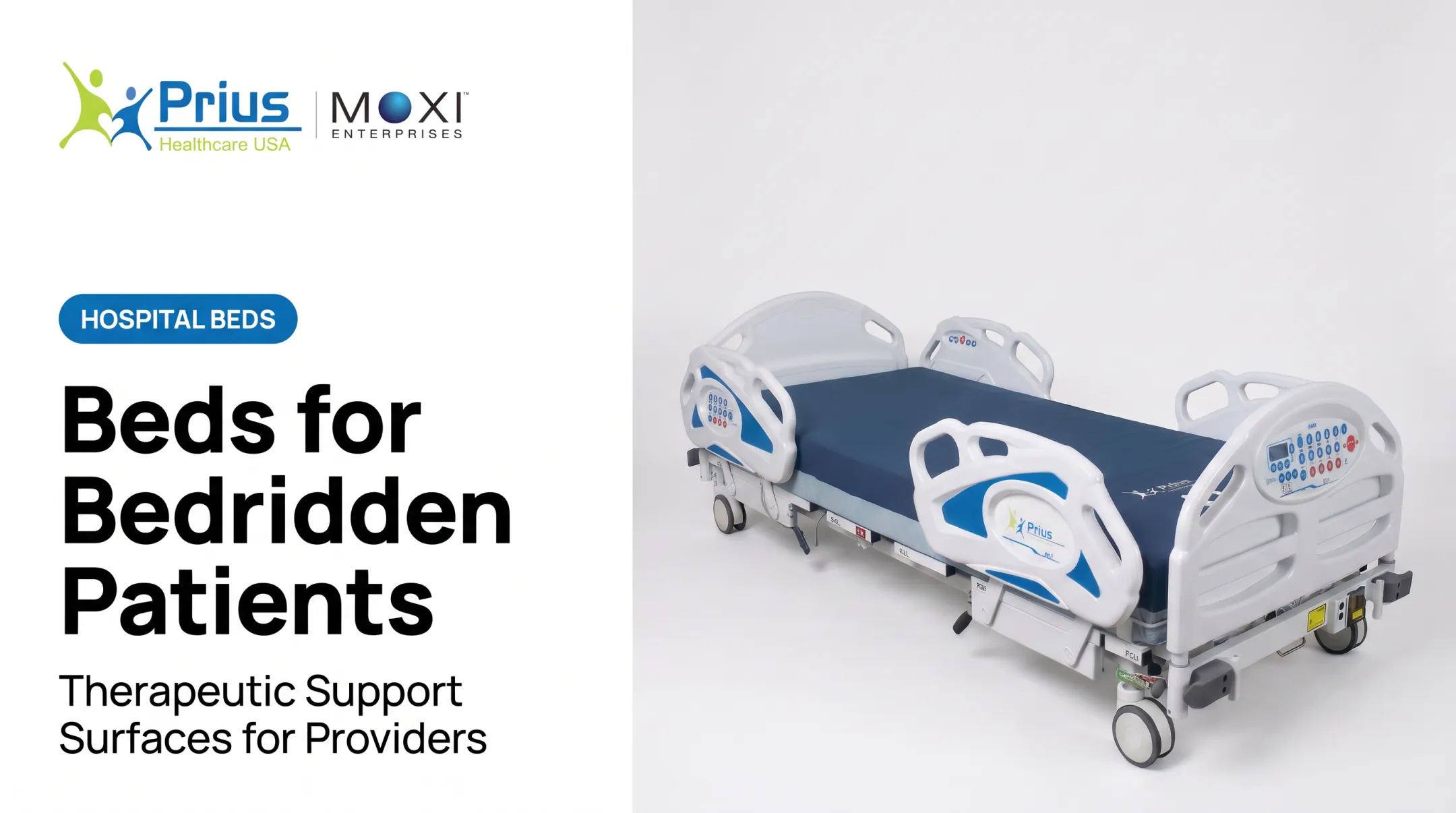
For higher-risk individuals, an appropriately selected low or adjustable hospital bed frame can shorten the distance to the floor and simplify transfers. This is where equipment selection intersects with clinical judgment.
Prius Healthcare USA, based in Oldsmar, Florida, supplies specialty hospital bed frames and therapeutic support surfaces to healthcare organizations through its U.S. distributor network.
Its Descend Ultra-Low Floor Bed adjusts electrically from 2.7 inches to 25 inches, so it can sit close to floor level for people at elevated fall risk. Its Ai1 All-In-One Expandable Low Bed offers a low height under 10 inches, plus a 3-zone bed-exit alarm and nurse-call connectivity for facility settings.
This equipment supports prevention but does not replace a full care plan. The mattress and support surface still need to be compatible with the frame and the individual. Side-rail suitability, where used, should always be assessed by the attending physician or nurse.
Use Alarms and Fall Mats as Part of a Prevention Plan
Floor mats can cushion the impact of some falls, but they don't stop someone from leaving the bed in the first place. Placement matters: a mat should protect likely impact areas without creating a new tripping hazard or interfering with a wheelchair or walker.
Bed-exit sensors and nurse-call-connected alerts serve a similar supporting role in care settings. Research reviewed in a Cochrane analysis of hospital trials found no clear reduction in bed-related injuries from low beds or bed-exit alarms alone. These tools work best alongside observation, clear pathways, and a genuine safe-exit plan.
Tips for Long-Term Prevention and Control
Fall prevention isn't a one-time setup. It requires ongoing attention:
- Routine checks: Review bed height, rail condition, mattress compatibility, mat placement, lighting, and equipment alarms on a documented schedule — and after any incident.
- Caregiver training: Make sure everyone involved knows the person's safe transfer technique, preferred exit side, toileting plan, and when to escalate to professional help.
- Documentation: Record falls and near-falls, including time of day, location, activity attempted, symptoms, footwear, and environmental conditions. Patterns often reveal the real problem.
- Reassessment triggers: Reassess after a medication change, hospital discharge, a new mattress or bed, or any decline in mobility.
None of this requires elaborate systems. A clipboard and a consistent habit of checking in after changes go a long way.
Conclusion
Bed falls in older adults almost always have identifiable causes: a mix of personal health factors, environmental hazards, and equipment that doesn't quite fit the person using it. Rarely is there a single culprit.
Prevention works best as a combination:
- Safer nighttime routines
- Thoughtful room design
- Professional assessment
- Equipment chosen for the individual, not picked off a shelf
Families and care organizations facing a recent fall, near-fall, or noticeable change in mobility are better served by professional guidance than by another generic rail or alarm. There is no universal fix—only the right mix for the person in that specific bed.
Frequently Asked Questions
What can I do to keep from falling out of bed?
Start with an individualized bed height, a clear exit path, good lighting, and non-slip footwear within reach. Keep mobility aids nearby, and ask a healthcare professional whether a rail, mat, or different bed suits your specific situation.
What are the best bed rails for seniors to prevent falls?
There's no universally "best" rail. The right choice depends on mobility, cognition, bed type, entrapment risk, and how the rail will be used. All of these require a professional assessment before installation.
What are the 5 P's of falls prevention?
Terminology varies by facility, but the concept usually covers pain, potty needs, position, personal items within reach, and placement or environmental safety. Check with your care team's specific written protocol for the exact version used.
Are bed rails safe for elderly people?
Rails can help some people reposition or hold on while transferring, but they also carry entrapment, climbing, and injury risks for others. They should always be assessed, installed, and monitored by a qualified professional.
Do floor mats prevent falls from bed?
Floor mats generally don't stop someone from getting out of bed, but they may reduce injury if a fall does occur. Proper placement matters. A poorly positioned mat can itself become a trip hazard or interfere with mobility equipment.
What should I do if an elderly person falls out of bed?
Don't rush to lift them. Check for responsiveness and signs of injury first, keep them still if injury is suspected, and call emergency services if warranted. Notify the healthcare team afterward for follow-up and reassessment.