Many caregivers assume any adjustable hospital bed can "turn" a patient. It can't, at least not on its own. An adjustable bed improves positioning. A turning, lateral-rotation, or repositioning system actively moves the patient from one position to another. That distinction shapes everything else in this guide: bed types, real-world use cases, how to choose the right equipment, and the safety practices that keep patients out of harm's way.
Key Takeaways
- Height and head-angle adjustments aren't turning; verify true lateral rotation or assisted movement.
- Select beds for mobility, weight, pressure-injury risk, transfers, and caregiver capacity.
- Turning tech cuts manual handling but never replaces a repositioning plan or skin checks.
- Weigh mattress fit, side-rail safety, and service support as heavily as the frame.
What Does Patient Turning Mean in a Hospital Bed?
In hospital beds, several related terms get used interchangeably. They are not the same:
- Turning: Moving the body from one position to another, typically supine to side-lying, to shift pressure off vulnerable tissue
- Repositioning: The broader category, from a full turn to a small shift that relieves sustained loading on one spot
- Lateral rotation: Powered, cyclical side-to-side movement built into certain beds and mattress systems
- Assisted transfer: Moving a patient between surfaces (bed to wheelchair), not turning them in place
Turning vs. Articulation
A standard adjustable bed changes the surface shape. A dedicated repositioning system, whether it uses straps, air cells, or a powered platform, changes the patient's position.
Look at the Descend care bed as an example. Its backrest articulates from 0° to 70°, and the knee section moves 0° to 35°. Chair positioning synchronizes the head section, knee-gatch, and reverse Trendelenburg into one seated posture. None of that turns a patient side to side.
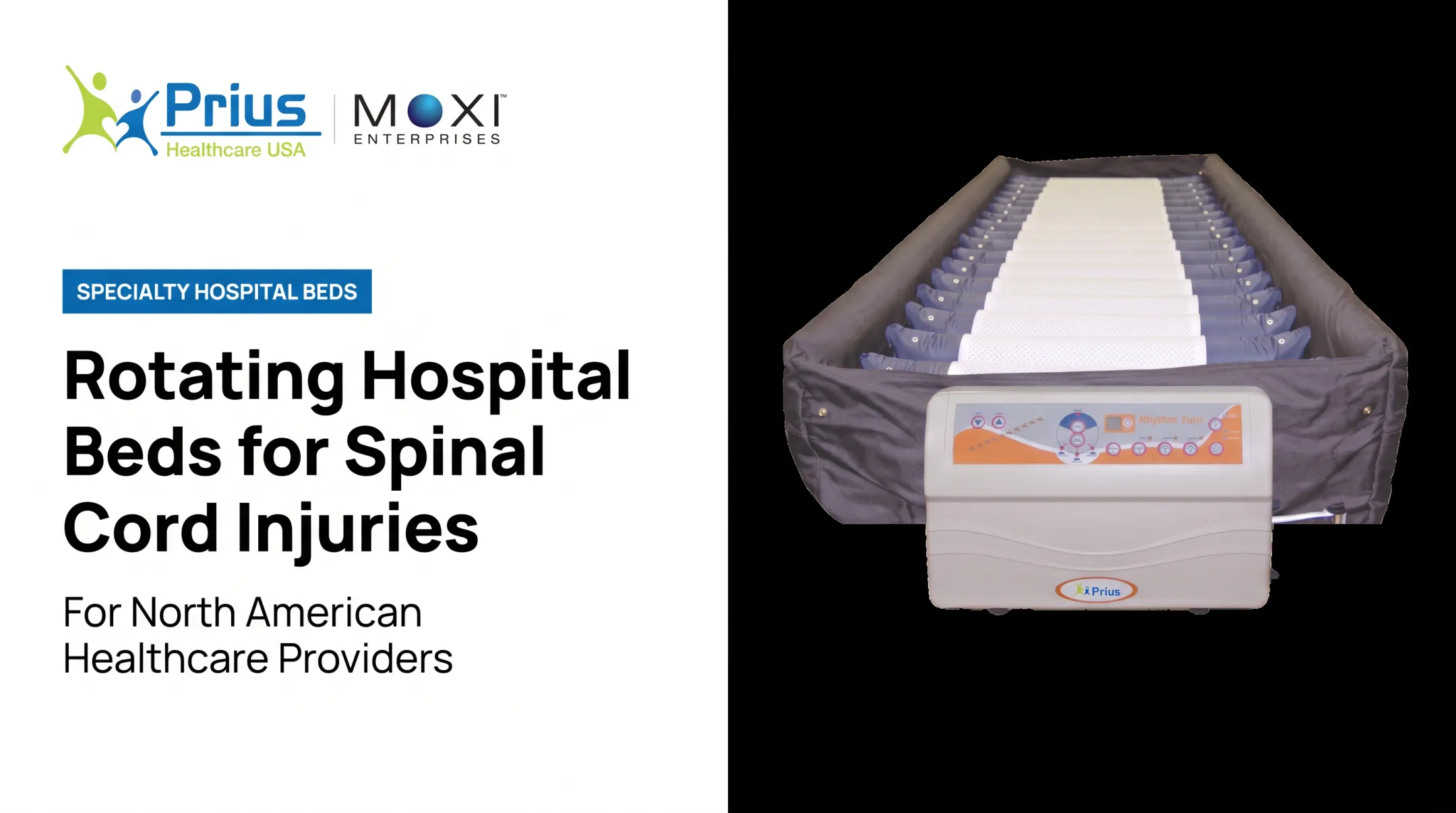
A system like Rhythm Turn is different. It offers LEFT, RIGHT, or FULL TURN modes with 20° or 40° lateral rotation on a settable cycle of 3 to 95 minutes.
In short:
- Articulation changes bed angles and posture (head, knee, chair, Trendelenburg)
- True turning rotates the patient laterally on a timed cycle for pressure redistribution
Terminology varies by manufacturer. "Rotation" might mean:
- Side-to-side lateral rotation for pressure redistribution
- A 90-degree rotation toward the bed edge for egress
- Conversion into a seated or chair position
Always check the manufacturer's specification sheet rather than assuming a term applies universally.
Even when a bed offers a true turn mode, clinical limits still come first. Turning requirements vary by diagnosis.
Spinal precautions, fresh surgical wounds, respiratory status, and attached lines or drains all affect what is safe. A nurse, physician, physical therapist, or wound-care specialist should set the care plan—not product copy alone.
Benefits and Applications of Turning and Repositioning Beds
Turning support fits into a broader pressure-injury prevention plan, but it isn't a standalone fix.
The 2025 international pressure-injury guideline notes that even an appropriate support surface does not eliminate the need for individualized repositioning. Any 2- to 3-hour turning interval it suggests carries only conditional, low-certainty evidence.
Outcome data is mixed, too. A systematic review of 18 studies covering 1,466 mechanically ventilated ICU patients found continuous lateral rotation associated with lower odds of ventilator-associated pneumonia. Its pooled result for pressure ulcer reduction wasn't statistically significant.

In plain terms: rotation may help with pulmonary outcomes in specific ICU populations. It's not proof that any turning bed prevents pressure injuries.
Where Turning Support Helps Most
Powered repositioning reduces the lifting, pulling, and awkward postures caregivers face during manual turns. Staff still need training in safe patient handling and device operation, since the equipment doesn't replace technique.
Patient-side benefits include:
- Easier access for hygiene, dressing changes, and wound care
- Reduced skin shear during positioning, particularly with contour or chair-position features
- Greater comfort during prolonged immobility
- Support for moisture and temperature control, which matters for skin integrity over time
Rhythm Turn, for instance, is documented for use with existing stage 1 through 4 pressure ulcers as part of a facility's pressure-area management policy. Its low air loss therapy adds moisture and temperature management on top of the turning function.
Common use cases include:
- Prolonged immobility
- Bariatric care
- Palliative care
- Post-surgical recovery
- Situations requiring frequent repositioning
The right choice also shifts by setting. An ICU needs tighter integration with monitoring and lines. A home-care patient needs something a family caregiver can operate safely without a nursing team nearby.
Hospital Bed Types and Features That Support Turning
Not every "rotating" bed does the same job. Treating these categories as interchangeable is where most buying mistakes happen.
| Bed category | What it actually does | Don't confuse it with |
|---|---|---|
| Lateral-rotation bed/mattress | Cycles the patient side to side for pressure management | Standard articulating bed |
| Rotoprone system | Turns a critically ill patient fully prone for respiratory therapy | Routine lateral turning |
| Low bed / fall-prevention platform | Drops close to floor height to reduce fall injury | A turning system |
| Bariatric bed | Higher weight capacity and wider deck | A standard-capacity turning bed |
| Chair-convertible bed | Moves into a seated posture for eating or egress | A therapeutic turning bed |
Features Worth Checking in the Spec Sheet
Before comparing models, confirm:
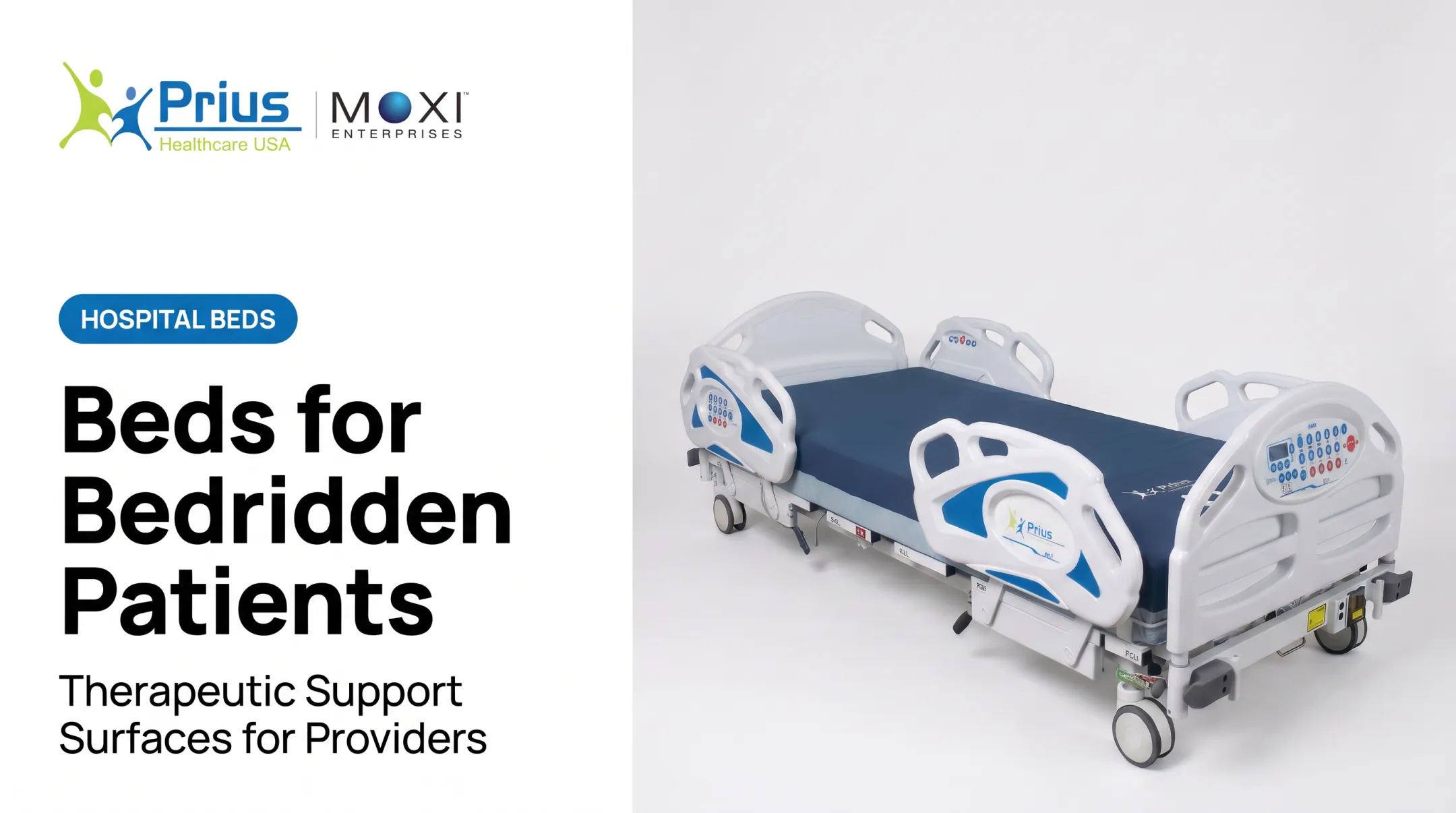
- Weight capacity vs. safe working load: these differ. The Ai1 bed lists a 550-pound patient capacity and a 600-pound safe working load that includes mattress, bedding, and equipment.
- Turning angle and cycle speed: Rhythm Turn offers 20° or 40° rotation, with weight limits from 450 to 850 pounds across three width sizes.
- Emergency and override functions: look for electric and manual CPR release, plus battery backup for outages (adjustments typically run slower on battery).
- Monitoring integration: in-bed scale, nurse call, and bed-exit alarm zones matter more in acute settings.
- Mattress compatibility: a powered frame means nothing if the mattress isn't approved for that movement range.
That last point deserves its own callout. The mattress isn't an accessory bolted onto a turning bed. It's part of the turning system. A mismatched surface can undercut pressure redistribution, introduce shear, or simply fail to move correctly.
Some systems, like the LAL Turning Mattress Replacement, rely on under-mattress straps and air tubes tied to a master control unit, with full inflation taking 4 to 7 minutes. That's a very different mechanism from an integrated rotating platform, and the two aren't interchangeable parts.

How to Choose a Hospital Bed for Patient Turning
Start with the patient, not the catalog.
Needs Assessment
Work through these before comparing products:
- Can the patient assist with movement, or is this fully dependent care?
- What's the turning schedule the care team has prescribed?
- What's the patient's weight, body size, and skin condition?
- Are there respiratory needs, contractures, pain, or cognitive limits affecting bed control use?
- Are there lines, drains, or devices that limit certain movements?
Setting-Based Checklist
Requirements shift depending on where the bed will live:
- Home care: doorway clearance, grounded electrical outlet, flooring type, caregiver access on both sides
- Rental fleet: durability across repeated cleaning cycles and redeployment between patients
- Long-term care or hospital: room dimensions, cleaning workflow, storage for accessories
- Government/institutional purchasing: documented compliance, warranty terms, and vendor track record
Total Cost of Ownership
Purchase price is only the starting number. Factor in:
- Delivery and setup
- Staff training
- Replacement parts
- Preventive maintenance (typically recommended annually)
- Warranty coverage and technician availability
Wear items like batteries often carry shorter coverage than the frame itself, so read warranty terms closely before signing off.
Institutional buyers should also ask about order minimums and volume terms. Some manufacturers, for example, apply no minimum order requirement but offer a small quantity discount, such as 2% on orders over $3,500 shipped to a single invoiced location, which matters for facilities placing recurring orders.
Confirm relevant U.S. regulatory, electrical, and infection-control requirements with qualified staff, and review the manufacturer's instructions before purchase rather than relying on sales copy.
Prius Healthcare USA works with hospitals, dealers, and rental fleet operators on specialty hospital bed frames and therapeutic support surfaces. That includes distributor coordination, authorized technician dispatch, and warranty support. Confirm product capabilities and service terms directly, since specifications vary by model.
Safety and Care Practices for Turning Beds
Movement carries risk. Run a pre-movement check every time before you start.
Before Any Movement
- Confirm the patient's identity and comfort level
- Check lines, tubes, and drains for slack
- Lock casters and confirm side rails are properly positioned
- Clear the area under and around the bed of people and equipment
- Confirm the selected movement is actually appropriate for this patient today
The FDA's entrapment guidance highlights gaps between rails, mattress, and frame as a known hazard, which is why mattress sizing and rail compatibility need to match the bed exactly, not just approximately.
Known Risk Areas
- Shear and friction during lateral movement, especially at steeper rotation angles
- Entrapment from mismatched rails or mattresses
- Unexpected movement from mechanical or electrical faults—disconnect the battery and unplug the bed
- Trendelenburg positioning only under a physician's order, with the patient attended throughout the adjustment
During any turn:
- Explain the action to the patient before you start
- Watch for pain or distress and stop if something feels wrong
- Check skin and alignment afterward
- Document anything unusual

Maintenance That Can't Be Skipped
- Follow manufacturer cleaning instructions exactly; some components allow only wipe disinfection, never high-pressure water
- Inspect motors, cables, and control housings on a set schedule
- Test alarms and emergency stop functions regularly
- Remove damaged equipment from service immediately—don't wait for the next scheduled check
Complete formal staff training and put a written escalation process in place for malfunctions or patient injury before the bed is used on a live patient.
Frequently Asked Questions
What is a bed that rotates for patients?
A rotating or turn-assist bed uses a powered mechanism to move a patient side to side, distinct from ordinary head-and-foot articulation. Clinical suitability always depends on the patient's condition and care plan.
What are some hospital beds that can rotate?
Categories include lateral-rotation beds, turn-assist systems, rotational home-care beds, and rotoprone systems for prone positioning. Always verify the exact movement range, weight capacity, and mattress compatibility for the specific model.
What conditions require a rotoprone bed?
Rotoprone systems are specialized critical-care devices used for select patients, often related to severe respiratory illness, under intensive clinical supervision. Suitability isn't determined by diagnosis alone.
What is the best bed for a bedridden person?
There's no single universal model. The right choice depends on mobility, pressure-injury risk, weight, transfer needs, respiratory status, caregiver support, and room layout.
What is a hospital bed that converts to a chair?
Chair-position beds move the head, knee, and sometimes leg sections to support an upright seated posture for eating, socializing, or transfer assistance. This function is separate from lateral-turning capability.
What are the key features of an ICU bed?
ICU beds typically combine electric positioning, height adjustment, rail and brake systems, and emergency positioning functions like Trendelenburg. Some models add monitoring or weighing functions, but exact features vary by manufacturer and facility requirements.