Introduction
Anyone who has cared for a bed-bound patient knows the math: skin breaks down fast when pressure sits in one spot too long.
A 2021 study of nearly 296,000 acute-care patients found pressure injuries in 8.97% of patients, with 2.58% classified as hospital-acquired, based on 2018-2019 survey data.
That's why the right support surface matters, whether you're a family caregiver, a hospice nurse, or a DME dealer stocking a rental fleet.
"Pressure relief mattress" isn't one product. It could mean a foam replacement mattress, a powered alternating-pressure system, a low-air-loss surface, or a simple comfort upgrade. These are not interchangeable.
This guide ranks current U.S.-available options by pressure redistribution, moisture control, repositioning ease, durability, cleaning, and service support, so you can match the surface to the actual clinical need.
Key Takeaways
- The best mattress depends on use case: everyday comfort, prevention, active wound care, or rental fleet duty.
- Any surface works best with repositioning, skin checks, and guidance from a qualified clinician.
- Judge options on verified specs—not claims—when comparing Prius Healthcare USA and other current U.S. surfaces.
- Always confirm weight capacity, bed compatibility, power needs, and warranty terms before ordering.
Overview of Pressure Relief Mattresses in the U.S. Market
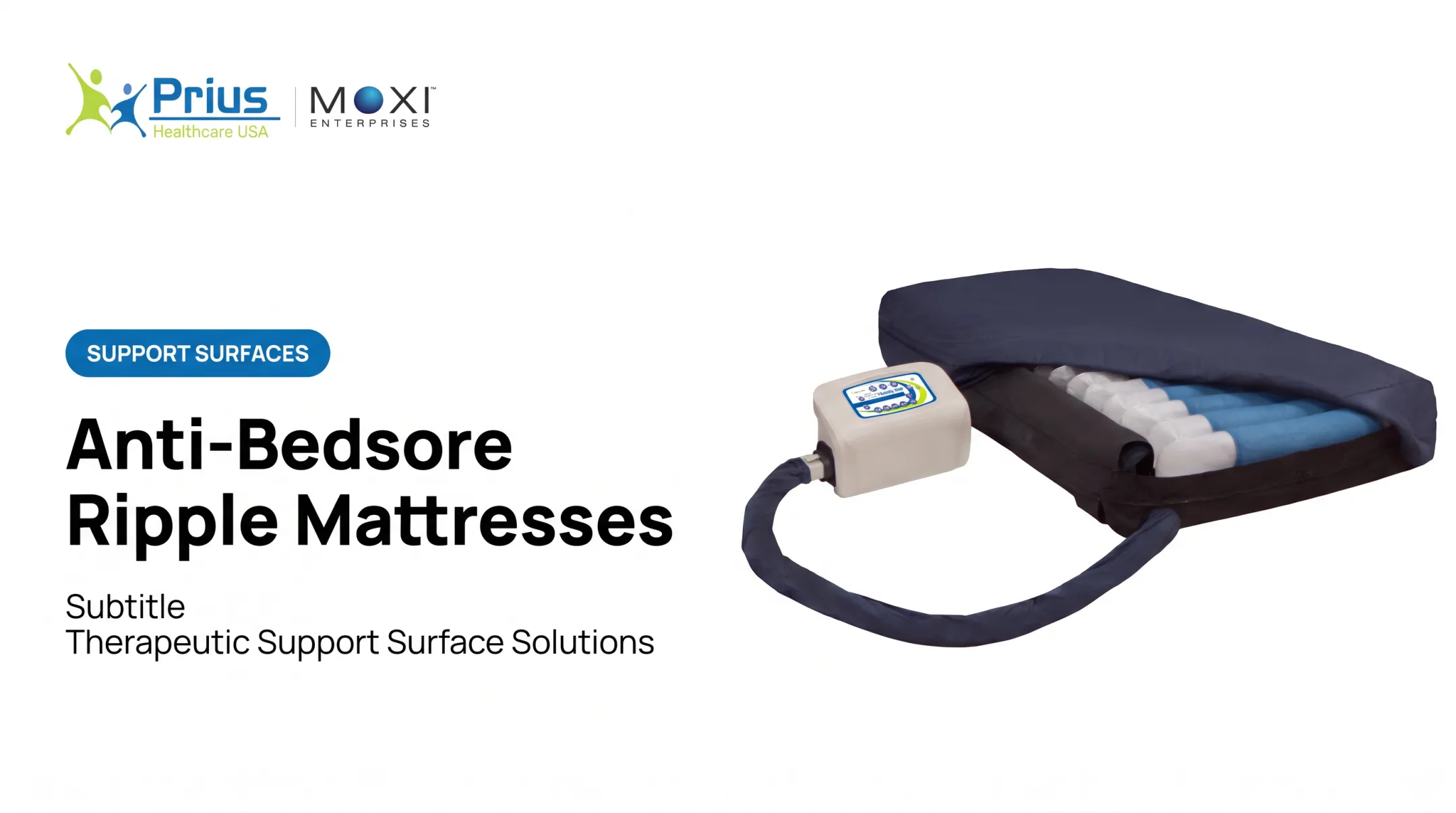
Pressure relief mattresses in the U.S. range from foam replacements to powered air systems. Use the terms and category comparison below to match surface type to risk level, moisture needs, and care setting before you weigh brand rankings.
Key Terms, Defined Simply
Pressure injuries develop from a mix of sustained pressure, friction, shear, and moisture, usually over bony areas like the sacrum, heels, and hips. A mattress can reduce risk factors, but it doesn't guarantee prevention on its own.
A few terms you'll see repeatedly:
- Pressure redistribution: spreading body weight over a wider surface area
- Active surfaces (alternating pressure): powered air cells that cycle independently of the patient's load
- Reactive surfaces (foam, static air): respond to the patient's weight rather than cycling on their own
- Low air loss: airflow built into the surface to help manage heat and moisture at the skin
How the Main Categories Compare
| Category | How it works | Typically best for |
|---|---|---|
| Foam or gel | Contours passively to body weight | Low-to-moderate risk, quiet home settings |
| Alternating pressure | Air cells inflate/deflate in timed cycles | Moderate-to-high risk, existing pressure injuries |
| Low air loss | Airflow manages heat and moisture at the skin | High-moisture patients, higher risk |
| Hybrid/reinforced | Combines foam, air, or gel layers | Patients who need mobility support plus pressure care |
Foam and gel surfaces reduce motion transfer and cost less to maintain, but they don't actively cycle pressure the way powered systems do. Alternating-pressure systems require a pump, generate some noise, and typically need a clinical assessment before selection.
In U.S. settings, these products show up across home healthcare, hospice, skilled nursing, VA medical centers, and HME/DME rental fleets. Each channel brings different procurement, cleaning, and turnaround needs. A nursing home replacing a mattress after every discharge has very different priorities than a family caring for one hospice patient at home.

The rankings below reflect that reality. Match the surface to the patient's condition, mobility, weight, and care environment, not the brand name alone.
Best Pressure Relief Mattresses and Therapeutic Support Surfaces in the U.S.
We evaluated each option on pressure redistribution, comfort, moisture control, repositioning ease, cleanability, durability, and total cost of ownership. Specifications below come from current manufacturer documentation; verify details directly before purchase, since models and availability change.
Prius Healthcare USA Universal Therapy System — Best U.S. Healthcare Distribution and Support Option
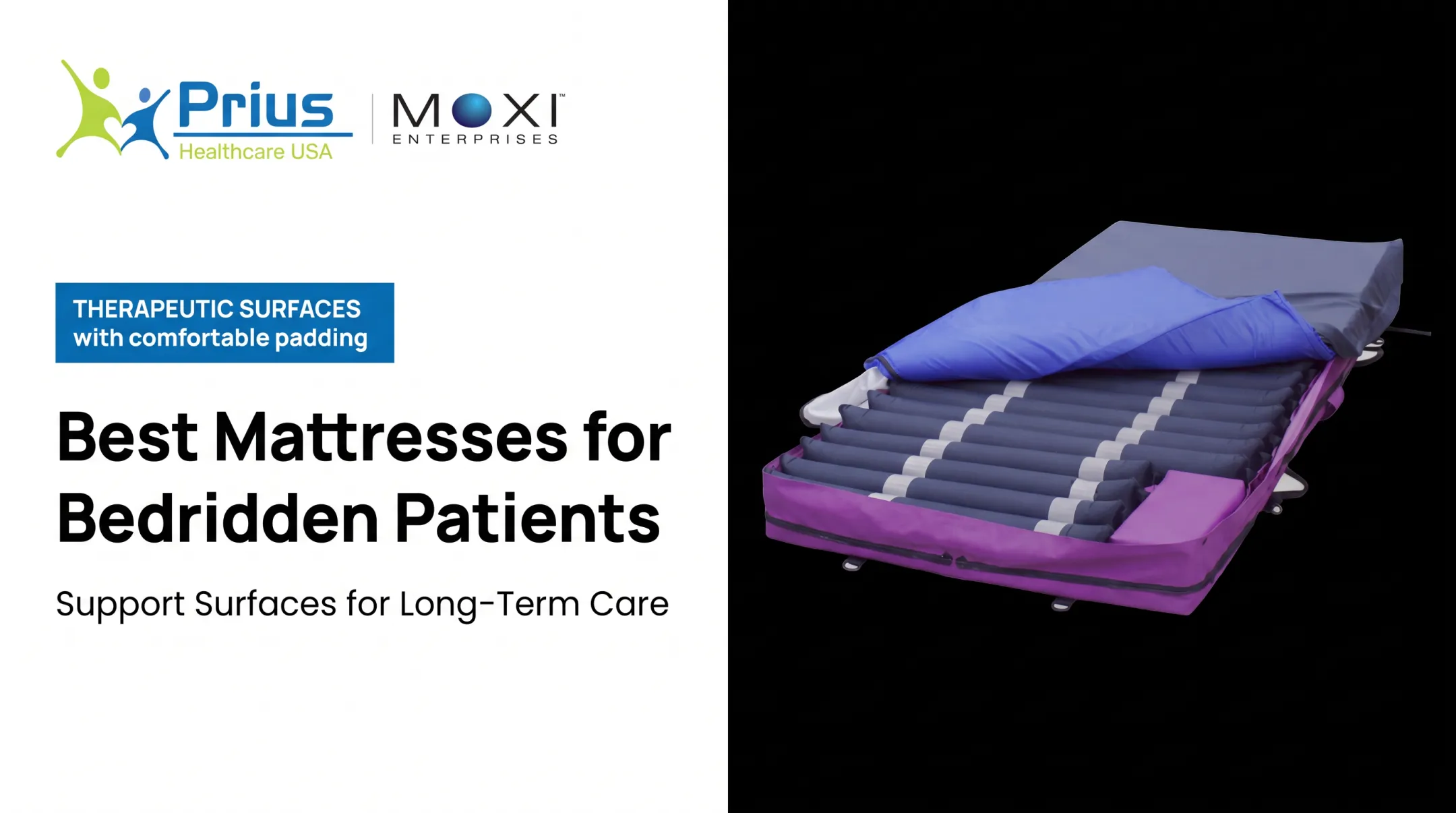
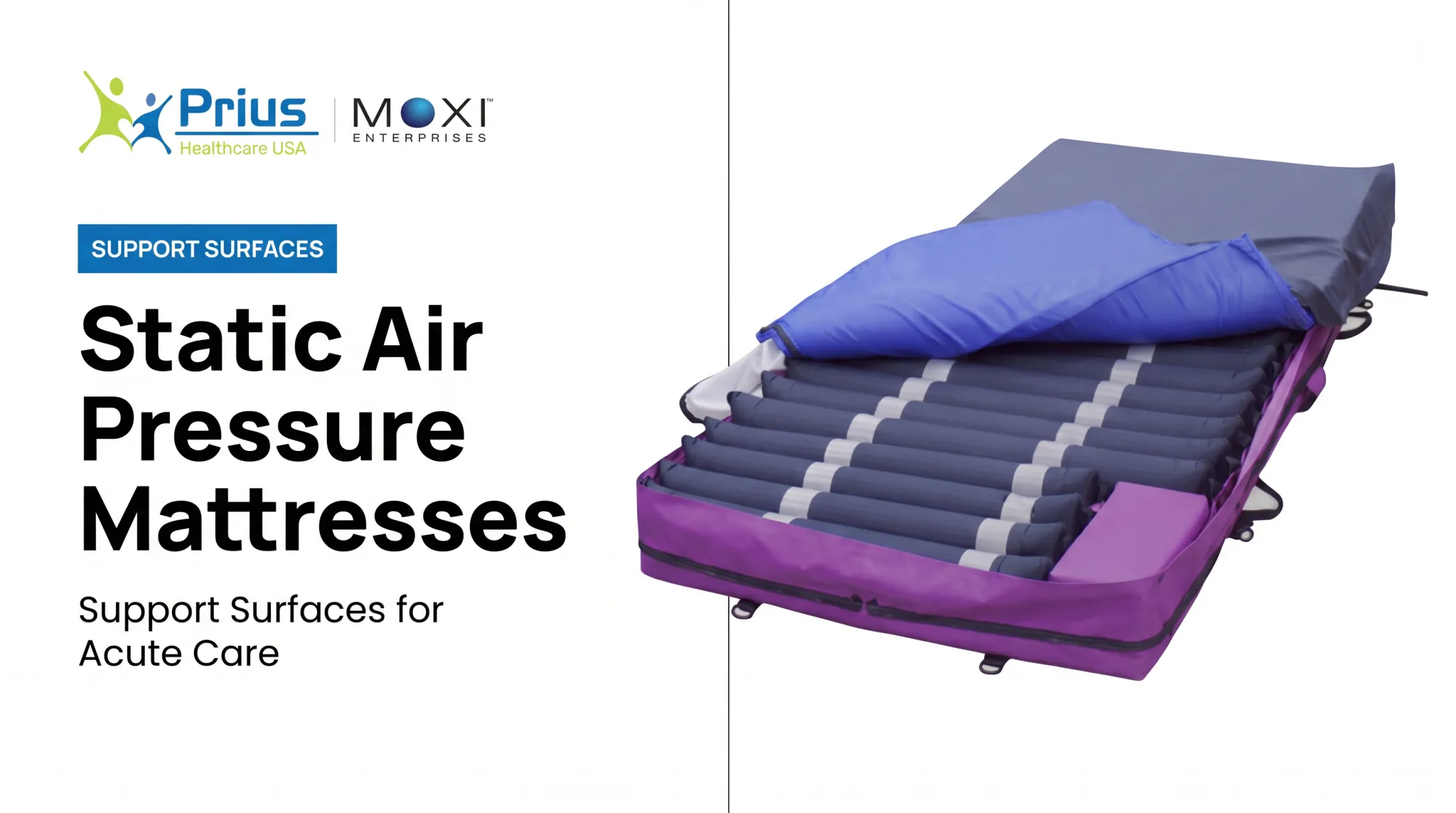
The Universal Therapy System (UTS) is a powered alternating-pressure mattress replacement built for patients at risk of pressure ulcers across home, hospice, and facility settings. It uses 21 nylon, PU-coated air cells, and its foam base is designed to provide baseline support if power is interrupted.
Prius Healthcare USA backs the system through a U.S. distributor network, an East Coast warehouse in South Carolina, and an exclusive manufacturing partnership with SGS product certification. Authorized technicians are dispatched directly by Prius, and warranty support runs through the original purchaser.
| Attribute | Detail |
|---|---|
| Product type | Powered alternating-pressure mattress replacement |
| HCPCS code | E0277 |
| Dimensions | 80" x 36" x 7" |
| Unit weight | 31 lb |
| Weight capacity | 350 lb |
| Pressure mechanism | 21 nylon, PU-coated air cells |
| Cover/base | Stretch nylon PU-coated top; PVC-coated polyester base |
| Safety feature | CPR Quick Release System |
| Power, cleaning, warranty | Confirm current details with Prius Healthcare USA |
This surface fits patients who need active pressure cycling in a mainstream care setting, not necessarily bariatric patients above 350 lb or those needing a documented wound-treatment protocol. For those cases, ask a clinician about a higher-capacity or low-air-loss alternative.
Healthcare facilities, HME/DME dealers, and hospice teams can contact Prius Healthcare USA at 813-854-5464 or info@priushc.com for current specifications and support-surface guidance.
Drive Med-Aire Plus 8 (14029DP) — Best for Active Pressure Redistribution
This alternating-pressure and low-air-loss mattress replacement adds a 10-inch defined perimeter, which helps with transfers and reduces the "rolling off the edge" feeling some patients report. Visual and audible diagnostic alarms flag low pressure or power loss.
Caregivers can choose from four cycle settings, and the cell design lets air escape gradually to manage moisture at the skin interface.
| Attribute | Detail |
|---|---|
| Dimensions | Standard mattress replacement sizing |
| Weight capacity | 450 lb |
| Therapy cycles | 10, 15, 20, or 25 minutes |
| Perimeter | 10" defined static edge |
| Alarms | Visual and audible diagnostic indicators |
| Cleaning | Damp cloth with mild detergent; air-dry thoroughly |
| Power failure | Alarm only; battery backup not specified by manufacturer |
| Noise rating | Not published by manufacturer |
One caveat: neither the manual nor spec sheet lists a decibel rating or confirms battery-backed therapy during an outage. Don't assume the pump runs silently or continues inflating without mains power. This system suits patients who need active cycling but doesn't replace a documented wound-care assessment.
Savaria SPAN Geo-Mattress UltraMax — Best for Quieter, Low-Maintenance Support
For patients who don't need active air cycling, or facilities that want to avoid pump noise and power dependency, this foam surface uses a segmented top layer with a UHP 500 torso section and a firm transfer perimeter.
Unlike a consumer memory-foam mattress, it's built with zoned support specifically for immersion and offload, plus a fluid-resistant, bidirectional-stretch cover.
| Attribute | Detail |
|---|---|
| Construction | Segmented foam, zoned core, firm perimeter |
| Weight capacity | 500 lb (36" width); 600 lb (39"/42" widths) |
| Cover | LifeSpan bidirectional-stretch, fluid-resistant |
| Cleaning | Wipes clean with hospital-grade cleaners |
| Power | None required |
| Deck compatibility | Recessed-deck version available with shaped edges |
The tradeoff: foam is reactive, not active. It won't cycle pressure automatically, and manufacturers don't publish numerical heat-retention or immersion limits. For patients with declining skin integrity, ask whether a powered system is more appropriate.
Joerns ProCair Plus — Best Balance of Pressure Relief and Mobility
This convertible surface pairs a three-zone air core with a 1-inch viscoelastic foam topper, giving patients contouring support while keeping a firm perimeter for safer transfers. Facilities can add optional powered alternating-pressure therapy later without replacing the whole mattress.
- Three-zone inner air core for targeted pressure redistribution
- Firm transfer perimeter to reduce gaps at the bed frame
- Optional powered control unit for alternating therapy
- Available in 36" or 42" widths
Core specifications:
| Attribute | Detail |
|---|---|
| Weight capacity | 500 lb |
| Widths | 36" or 42" |
| Support layers | Air core plus viscoelastic foam topper |
| Frame fit | Reduces gaps at frame/rails; not a universal-fit guarantee |
| Warranty, cleaning | Confirm with supplier |
This hybrid design suits patients who need some mobility assistance but don't require full powered therapy yet. Patients with advanced or worsening wounds likely need a dedicated low-air-loss system instead.
Savaria PressureGuard Easy Air LR — Best for Home Care or Hospice
This powered mattress replacement is built for simple setup in home and hospice environments. Auto Firm mode firms the surface for 30 minutes during transfers or repositioning, then returns to therapy mode automatically.
- Adjustable comfort settings with control lockout for caregiver safety
- Two relocation handles for easier repositioning between rooms
- Coverlet wipes clean; zippered component is machine-washable and air-dried
Core specifications:
| Attribute | Detail |
|---|---|
| Weight capacity | 500 lb (FLOAT/ALTERNATING); 350 lb (ROTATION mode) |
| Setup | Powered mattress replacement, not an overlay |
| Transfer mode | 30-minute Auto Firm |
| Cleaning | Hospital-grade wipe-down; washable zippered cover component |
| Deck options | Recessed-deck version with shaped edges available |
Caregivers should still pair this surface with a repositioning schedule, heel offloading, and skin checks. A mattress handles pressure, not incontinence care or wound dressing changes.

How We Chose the Best Pressure Relief Mattresses
Buyers make a few predictable mistakes:
- Choosing by softness alone
- Assuming any memory-foam mattress is "medical-grade"
- Skipping the weight-capacity check
- Ignoring whether replacement parts will still be available in three years
We treated pressure redistribution as the top criterion. According to a 2021 Cochrane review, reactive air surfaces showed a relative risk of 0.46 compared with foam, while alternating-pressure air showed a relative risk of 0.63. Both findings rest on low-certainty evidence. No commercial model has been proven superior head-to-head; these are category-level findings, not brand endorsements.
Beyond redistribution, we looked at:
- Repositioning effort — how easily a caregiver can adjust the patient without a second person
- Transfer safety — firm edges or perimeters that support safe entry and exit
- Noise and alarms — pump sound levels and whether power-failure alarms actually mean continued therapy
- Cleaning and moisture control — wipeable covers, machine-washable components, and drying requirements
- Total cost of ownership — replacement parts, warranty length, and service response time
Different buyers weigh these differently:
- Home-care patients and caregivers care most about setup speed, comfort, and delivery timelines.
- Skilled nursing, hospice, and VA facilities need clinical documentation, staff training, and dependable warranty coverage.
- HME/DME dealers and rental fleets prioritize durability through repeated cleaning cycles, transport, and redeployment.
Medical safety note: An existing pressure injury, new drainage, fever, worsening discoloration, or severe pain needs prompt professional evaluation. This guide doesn't diagnose conditions or replace a clinician's care plan.

Conclusion
The best pressure relief mattress matches the patient's clinical needs, mobility level, body weight, and care setting. It works alongside repositioning and skin care, not instead of them.
Before ordering, compare these factors across your shortlist:
- Cleanability
- Durability
- Warranty terms
- Replacement-part availability
- Service response time
A mattress that looks great on a spec sheet but takes three weeks to get a warranty part replaced isn't a good fit for a busy facility.
U.S. healthcare organizations, HME/DME dealers, rental fleet operators, and hospice teams can reach Prius Healthcare USA at 813-854-5464 or info@priushc.com for current therapeutic support-surface specifications, availability, and service information.
Frequently Asked Questions
Do pressure-relieving mattresses work?
Pressure-redistributing surfaces can lower injury risk and improve comfort, but results depend on the mattress type, patient risk level, correct setup, and consistent repositioning. No surface works in isolation from a broader care plan.
What type of mattress is best for reducing pain?
It depends on the source of the pain, the patient's mobility, and clinical needs. A general comfort mattress differs from a therapeutic support surface, so persistent or severe pain warrants a professional assessment first.
What is the best mattress for preventing pressure ulcers?
Alternating-pressure, low-air-loss, foam, and hybrid systems each reduce risk differently. Cochrane's 2021 review found low-certainty evidence favoring air-based options over foam. Match the surface to patient risk level and a clinician's recommendation.
What is the difference between an alternating-pressure mattress and a regular mattress?
Alternating-pressure systems use a powered pump to inflate and deflate air cells in timed cycles. Regular foam, gel, or hybrid mattresses provide mostly static support that responds to the patient's weight rather than actively changing.
Can a pressure-relief mattress treat an existing bedsore?
No. A mattress can reduce additional pressure, but Medicare's coverage criteria for advanced support surfaces require a full care program including wound care, repositioning, and nutrition. Get a prompt medical evaluation for any existing wound.
What should caregivers look for in a pressure-relief mattress?
Prioritize pressure redistribution method, weight capacity, moisture control, and cleanability. Confirm bed-frame compatibility, transfer safety, power-failure provisions, warranty, and technical support before purchase.