Introduction
Choosing a bed for someone who can't get up on their own is a safety decision. The right frame and surface affect skin health, breathing, feeding, and how well a caregiver can physically manage daily care.
Prolonged immobility creates real risks:
- Pressure injuries develop within hours on the wrong surface
- Transfers become dangerous without proper height adjustment
- Poor positioning affects swallowing and breathing
- Caregivers strain their backs lifting patients who can't help themselves
The numbers back this up. In an AHRQ study of at-risk Medicare hospitalizations, new pressure injuries occurred in 1.8% of cases in 2021 and 1.7% in 2022—and that's with hospital-level monitoring already in place (AHRQ, 2024).
This guide compares bed types, breaks down the frame and mattress features that actually matter, and gives you a selection checklist built for U.S. home-care and healthcare settings.
Key Takeaways
- Choose an adjustable hospital bed system with a therapeutic support surface, not a standard household bed
- Match the setup to mobility, transfer ability, pressure-injury risk, weight, and time spent in bed
- Prioritize height adjustment, head/knee elevation, safe transfer features, and rails for patients and caregivers
- Have a physician, nurse, or qualified equipment provider assess needs before you buy or rent
What Type of Bed Does a Bedridden Patient Need?
Not every immobile patient needs the same equipment. The differences come down to function, not brand.
Standard beds offer no height adjustment, no positioning support, and no compatibility with medical accessories like IV poles or trapeze bars. They work fine for someone who's temporarily resting but fall short for anyone spending most of their day in bed.
Adjustable home-care and hospital beds solve that problem. They typically offer:
- Head and knee articulation for positioning
- Height adjustment for transfers and caregiver ergonomics
- Compatible mattress decks sized for therapeutic surfaces
- Attachment points for rails, trapeze bars, or IV poles
For patients who can't reposition or transfer independently, this adjustability makes safe feeding, comfortable positioning, and injury-free transfers possible.
When a Low Bed Makes Sense
Low beds can lower close to the floor, which reduces injury severity if a fall happens. Prius Healthcare USA's Descend platform, for example, adjusts from 2.7 inches to 25 inches with individually lockable casters and a 9V battery backup for emergency lowering during a power outage.

Low height alone doesn't eliminate fall risk, though. Supervision, transfer planning, and floor mats still matter. The low bed just changes what happens if something goes wrong.
Care Setting Changes the Calculation
Where the bed will live affects what makes sense:
- Home use often prioritizes ease of caregiver operation and compact footprint
- Hospice and home health teams need equipment that arrives fast and adjusts to changing needs
- Skilled nursing and long-term care facilities need durable frames built for multiple patients over years
- VA and government facilities typically follow contract-based procurement with specific documentation requirements
- Rental fleets need equipment that survives repeated cleaning, transport, and redeployment
Prius Healthcare USA distributes specialty hospital bed frames, including the Ai1 all-in-one expandable low bed and the Descend ultra-low floor bed, along with therapeutic support surfaces through its U.S. distributor network.
No single model fits every patient. A bed appropriate for a mobile fall-risk patient looks very different from one suited to someone with an existing wound or complex respiratory needs.
Clinical note: Patients with existing wounds, respiratory conditions, severe weakness, dementia, or complex transfer requirements need an individualized assessment before equipment selection. A physician, nurse, physical or occupational therapist, or wound-care specialist should guide that choice rather than a generic recommendation.
Features That Matter in a Bed for a Bedridden Patient
Once you've chosen a bed type, the features below decide whether the equipment solves the problems you face day to day.
Height Adjustment and Positioning
Raising the bed helps caregivers avoid bending and reaching. OSHA has noted that height-adjustable beds can reduce back injuries during patient care. Lowering the bed assists transfers and reduces fall consequences.
Confirm the manufacturer's safe operating range rather than assuming universal limits. The Prius Ai1, for instance, adjusts from 10 to 31 inches.
Head and knee elevation support feeding, communication, and comfort when approved by the care team. The Ai1 offers 0-70° head positioning and 0-35° knee positioning, with a synchronized chair position that moves both sections together.

Frame Stability and Compatibility
Check these specifications directly with the manufacturer rather than assuming they're universal:
- Weight capacity and safe working load (patient plus mattress, bedding, and equipment)
- Mattress deck dimensions
- Caster lock mechanisms
- Accessory compatibility (IV poles, trapeze bars, oxygen equipment)
Rails and Assist Handles: Weigh the Risk Both Ways
Bed rails aren't automatically safer. The FDA has identified seven distinct entrapment zones in hospital-bed systems—within the rail itself, between the rail and mattress, at the rail ends, and elsewhere (FDA, 2006).
Rail decisions should consider:
- Patient cognition and agitation levels
- Fall history and mobility level
- Whether the rail's purpose is repositioning support or fall prevention
- Correct fit between rail, mattress, and frame
An attending physician or nurse should assess side-rail suitability for each patient. Rails should never be treated as a default setting.
Caregiver Usability
Look for accessible controls, quiet operation, and features like emergency lowering during power failure. Before ordering, ask your supplier about:
- Delivery and assembly timelines
- Training for caregivers or facility staff
- Warranty coverage and what it excludes
- Replacement-part availability
- Response times for service calls
How to Choose the Right Mattress and Therapeutic Support Surface
The frame gets a patient positioned. The mattress determines whether that positioning actually protects their skin.
Reactive vs. Active Support Surfaces
Two categories exist, and the difference matters clinically:
- Reactive surfaces (foam or non-powered) change their pressure-redistribution properties only in response to the load placed on them
- Active surfaces (powered, alternating pressure) change properties independently of load, cycling pressure across different zones over time Current wound-care guidance recommends reactive foam for prevention in at-risk patients, with alternating-pressure air as an option, not a universal requirement, for higher-risk or existing wound situations.
Matching Mattress to Patient Need
| Patient Situation | Typical Mattress Category |
|---|---|
| Lower risk, some mobility | Basic foam prevention surface |
| Prolonged bed use, elevated risk | Higher-spec foam or hybrid |
| Existing wounds, very high risk | Powered alternating-pressure or low-air-loss system |
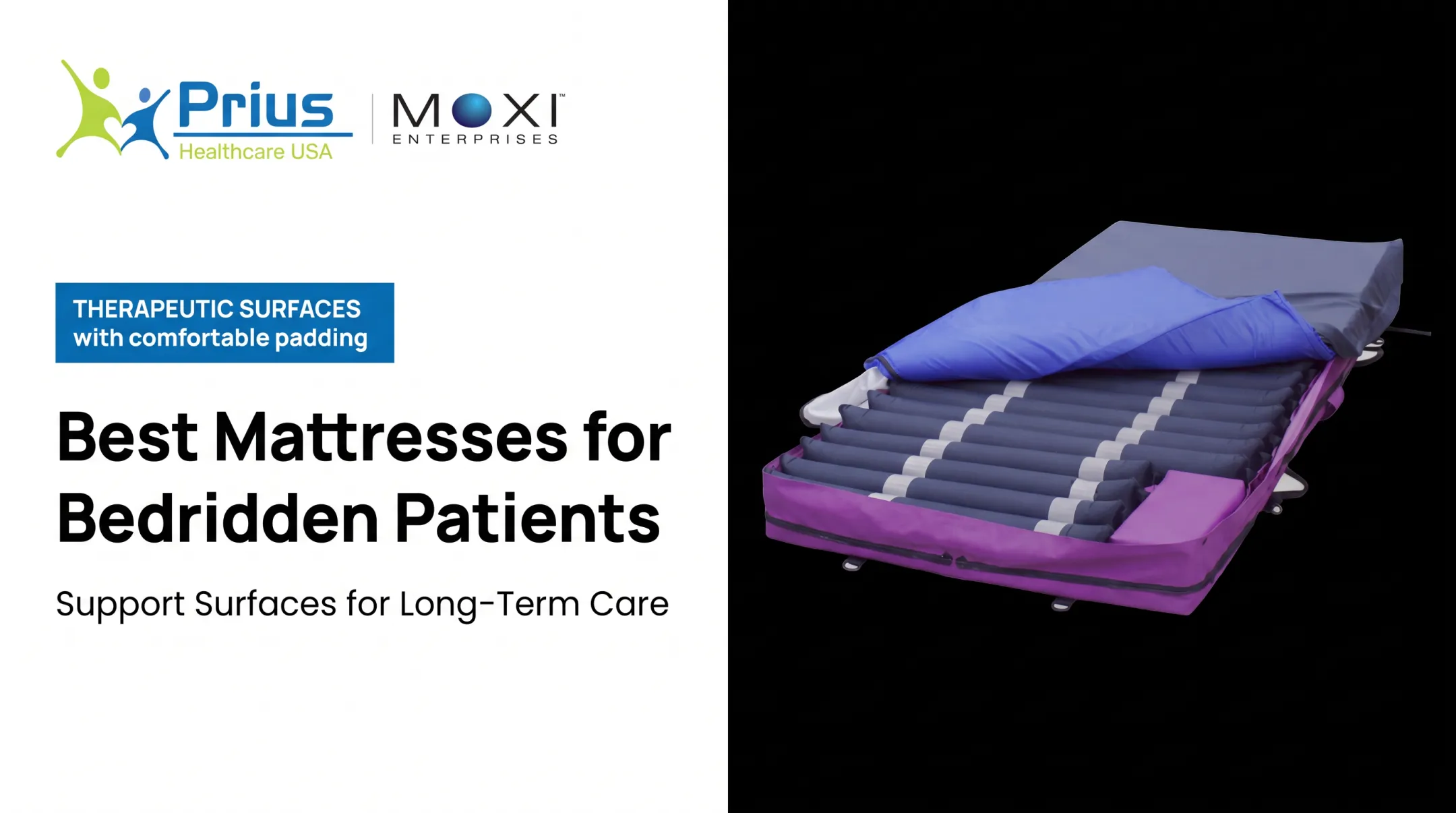
| A foam mattress like the RLX is positioned for low- to high-risk patients with stage 1 through single-site stage 3 concerns. | |
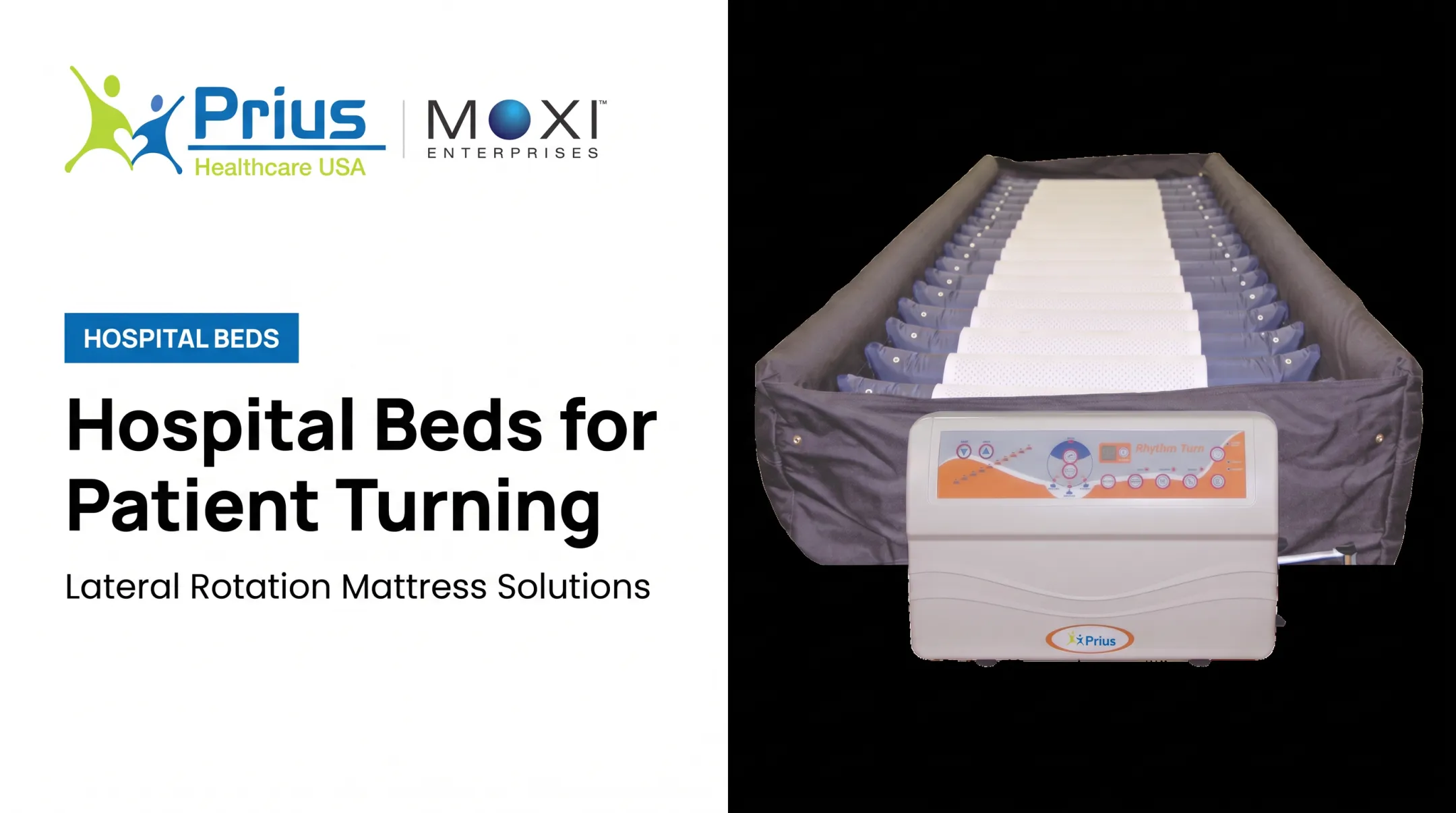
| Systems like the Duet combine low air loss, alternation, and rotation for medium- to high-risk patients with existing stage 1–4 pressure injuries under a facility's pressure-area management policy. |
Compatibility and Hygiene
A therapeutic surface only works if it fits the frame correctly. Check:
- Dimensions match the mattress deck exactly, not approximately
- Surface function continues when the bed is raised or lowered
- Covers are fluid-resistant and cleanable, with defined seam construction
- Replacement protocols exist after contamination or damage
Some systems go further: the Duet's Fowler Mode detects frame angle and adjusts pressure when the head of the bed is raised.
A Simple Decision Pathway
- Intact skin, some mobility → Basic reactive foam prevention surface
- Limited mobility, high risk → Higher-specification foam or reactive air
- Existing pressure injury → Reactive or active surface per wound-care assessment
- Complex clinical needs → Powered system with clinician oversight If the patient already has a wound or symptoms are changing quickly, involve a wound-care professional before choosing equipment. Weight, body shape, temperature sensitivity, and pain levels all factor into the right choice, but there's no substitute for a clinical assessment.

Risks a Suitable Bed Can Help Caregivers Manage
The right equipment reduces risk. It doesn't eliminate the need for hands-on care.
Pressure injury prevention still requires repositioning, skin inspection, moisture management, and good nutrition alongside any support surface. As Prius Healthcare USA's product documentation notes, pressure-relieving equipment doesn't replace good nursing care. It supports an individualized care plan that includes regular skin assessments.
Positioning for feeding can reduce risks tied to poor posture, but any coughing, choking, breathing changes, or suspected aspiration needs prompt professional evaluation—not a bed adjustment as the fix.
Caregiver strain drops when bed height, transfer-friendly positioning, and locked casters are used correctly. Caregivers shouldn't attempt transfers beyond their training, even with good equipment.
Watch for these warning signs and get medical attention promptly:
- Non-blanching redness or open wounds
- Worsening pain or new swelling
- Shortness of breath or fever
- Sudden confusion or marked change in alertness
Pressure injury prevention also depends on turning, not the surface alone. Turning schedules need to be individualized based on skin response and clinical judgment. They shouldn't be applied as a one-size-fits-all rule, even when a patient is on a good support surface.
Buying, Setup, and Maintenance Checklist
Before purchasing or renting, gather this information:
- Diagnosis-related mobility limitations and transfer method
- Patient height, weight, and time spent in bed daily
- Pressure-injury history
- Caregiver availability and room dimensions
- Electrical access and backup-power needs
Confirm the complete system, not just the frame:
- Mattress
- Rails or assist handles
- IV or over-bed accessories if needed
- Remote control
- Power cord
- Positioning aids
Ask Your Supplier
- What does delivery and assembly include?
- Is caregiver training provided?
- What's the warranty term, and what's excluded?
- Can authorized technicians be dispatched if something breaks?
Prius Healthcare USA equipment, for example, carries a one-year warranty, with wear parts like batteries covered for 90 days.
Ongoing Inspection
Check regularly for:
- Damaged covers or exposed components
- Malfunctioning controls or loose hardware
- Worn casters or unstable rails
- Mattress compression: foam compressed beyond 25% typically needs replacement
Facilities and rental fleet operators should document cleaning, inspection, and patient-specific setup procedures for every redeployment, not only at initial delivery.
How to Decide Which Bed Is Best for a Specific Patient
Run through five questions before choosing equipment:
- Can the patient reposition or transfer independently?
- How many hours per day are spent in bed?
- Is there current skin breakdown or high pressure-injury risk?
- What assistance does the caregiver need?
- Is this for home, rental, hospice, facility, or government use?
These answers point toward general priorities: basic adjustable support, a low-height fall-risk setup, a high-specification therapeutic surface, or a more comprehensive specialty system. They don't prescribe one product.
The "best" bed balances several things at once:
- Clinical suitability for the patient's condition
- Caregiver safety during daily use
- Room constraints and available space
- Maintenance and service support
- Total cost over the equipment's useful life
Purchase vs. rental depends on expected duration of use:
- Short-term or uncertain needs often favor rental for redeployment flexibility
- Long-term home use with stable, permanent conditions often favors purchase
Either way, patient needs change. Plan for that possibility rather than assuming today's setup works indefinitely.
A clinician or qualified equipment provider should confirm the final choice. This isn't a formality; it's how you avoid buying equipment that doesn't match the patient's actual condition.
Conclusion: Choosing a Bed That Supports Comfort and Safer Care
The right bed for a bedridden patient is a coordinated system: frame, support surface, accessories, caregiver technique, and clinical oversight working together.
Focus on these priorities:
- Adjustability for positioning and transfers
- Pressure management matched to actual risk level
- Transfer safety for both patient and caregiver
- Compatibility between frame and mattress
- Cleanability and durability for the long haul
- Accessible service when something needs fixing
Healthcare organizations, equipment dealers, rental operators, and care teams can explore specialty hospital bed frames and therapeutic support surfaces through Prius Healthcare USA's U.S. distribution network. Reach the team at 813-854-5464 or info@priushc.com for product and support information.
Frequently Asked Questions
What is the best bed for a bedridden person?
It depends on mobility, transfer needs, pressure-injury risk, and care setting. Most patients do best with an adjustable hospital bed plus a therapeutic support surface, chosen with clinical guidance.
Is a hospital bed necessary for someone who is bedridden?
Often yes. An adjustable hospital bed improves positioning, transfers, and caregiver safety. Confirm fit with a clinician; Medicare coverage requires documented medical necessity.
What type of mattress is best for a bedridden patient?
Standard foam works for lower-risk patients with intact skin. High-specification foam or hybrid surfaces suit prolonged bed use or elevated risk. Powered pressure-redistribution systems are typically reserved for existing wounds or very high-risk cases.
Will Medicare help pay for a hospital bed or pressure-reducing mattress?
Coverage depends on medical necessity, proper documentation, and equipment classification under Medicare's rules. Confirm specifics with Medicare, your clinician, and an enrolled supplier before purchasing.
Are bed rails safe for bedridden patients?
Rails can assist with repositioning and transfers, but they can also create entrapment, climbing, or restraint risks depending on the patient. An individualized safety assessment and correct installation are essential before use.
How often should a bed for a bedridden patient be inspected?
Follow manufacturer and facility guidance for routine checks, and inspect immediately after any damage, malfunction, contamination, or relocation. Covers, controls, casters, rails, hardware, and mattress support all need regular attention.