Skin injuries from immobility, moisture, and prolonged bed rest remain a documented risk for patients who are bedbound, according to the National Pressure Ulcer Advisory Panel. That risk is exactly why bed selection deserves real thought rather than a quick decision made under stress.
This guide covers bed types, must-have features, mattress options, home safety setup, coverage questions, and what to ask before delivery day arrives.
Key Takeaways
- Base bed selection on mobility, positioning needs, pressure-injury risk, and who provides daily care.
- Electric adjustment, safe rail configuration, locking casters, and mattress compatibility matter more than brand names.
- Hospice may arrange equipment, but models, accessories, and coverage details vary by provider and payer.
- Residential styling can preserve dignity without sacrificing clinical function.
- Professional buyers should weigh durability, service support, and redeployment value, not just sticker price.
What Is a Hospice Hospital Bed and Why Is It Used?
A hospice hospital bed is an adjustable medical bed built to support comfort and caregiving for people with advanced illness. It can be used at home, in an inpatient hospice unit, or in a nursing facility. Unlike a standard bed, it is built to adjust around the patient's needs instead of forcing the patient to adapt to a fixed surface.
Positioning Is a Clinical Decision
Raising the head or feet can support eating, breathing comfort, conversation, and personal care. But specific positioning, including how far to raise the head and how long to hold a position, should come from the patient's clinical team, not guesswork. A bed with strong articulation only helps if it's used the way a nurse or physician recommends.
Height Adjustment Changes Caregiving
Powered height adjustment lets caregivers raise the bed to a comfortable working level for transfers, linen changes, and personal care, then lower it for rest or entry and exit. Some beds still rely on a manual crank instead. In daily care, the difference shows up quickly:
- Powered height reduces caregiver bending and back strain during repeated repositioning
- Manual crank beds require physical effort and take longer during urgent adjustments
- Ultra-low models can drop close to floor level, which some care teams use alongside other fall-prevention steps
Pressure Redistribution Is a System, Not a Single Product
Immobility, moisture, fragile skin, and extended time in bed all raise pressure-injury risk. NPIAP identifies impaired blood flow, existing skin damage, and being bedfast as key risk indicators worth assessing individually.
No mattress or overlay works as a universal fix. Pressure redistribution depends on the bed frame, the mattress, and how consistently repositioning happens.
"Hospice bed" isn't one standardized product. It could mean a basic semi-electric frame, an ultra-low bed for fall risk, a bariatric frame built for higher weight capacities, or a therapeutic support-surface system layered on top of any of these.

Features to Prioritize When Selecting a Hospice Bed
Not every hospital bed offers the same level of control. Getting this part right affects daily caregiving far more than most families expect.
Semi-Electric vs. Full-Electric
- Semi-electric beds power the head and leg sections electrically but require manual height adjustment
- Full-electric beds power height as well, cutting caregiver effort during frequent adjustments
The Descend Ultra-Low Floor Bed, for example, uses separate electric drives for its back and foot sections, with electric height adjustment ranging from 2.7 inches to 25 inches. That range covers both an accessible transfer height and a near-floor position for fall-risk situations.
Rails, Positioning, and Mattress Fit
Side rails aren't automatically appropriate for every patient. The FDA notes that incompatible rails, mattresses, and frames can create entrapment gaps, and recommends assessing the complete bed system rather than the rail alone. Before adding rails, confirm:
- Rail suitability has been assessed by the attending physician or nurse
- Rail top height clears the mattress by a safe margin (Descend steel rails need at least ~8.7 inches above an uncompressed mattress)
- Only manufacturer-approved rails are used with a given frame
- Mattress length and width match the bed deck exactly
Durability and Everyday Usability
Everyday durability features reduce caregiver strain and downtime:
- Locking casters (Descend offers four, each lockable individually)
- Splash-resistant drive components for routine cleaning
- Battery backup for outages (Descend’s 9V backup supports one emergency lowering)
- Removable pan-style deck for faster cleaning between uses (as on the Prius Ai1)
Residential Design Matters for Dignity
A less clinical look—wood paneling, quiet motors, softer lines—helps the room feel more like home while clinical function stays primary.
Descend, for instance, pairs steel construction with wood inner paneling and runs below 53 dB(A) at one meter, quiet enough to avoid disrupting rest.
How to Choose the Right Hospice Bed and Mattress
Start with the patient, not the catalog. A quick needs assessment saves time and prevents costly reordering later.
Before choosing a bed, assess:
- Patient weight and body size
- Mobility and transfer ability
- Hours spent in bed daily
- Fall history and skin condition
- Continence and moisture exposure
- Who provides hands-on daily care
Matching Configurations to Common Situations
| Situation | Likely fit |
|---|---|
| Short-term or straightforward needs | Basic semi-electric bed |
| Frequent height changes, caregiver strain | Full-electric bed |
| Documented fall risk | Ultra-low bed (near-floor positioning) |
| Higher body weight or wider frame needed | Bariatric or expandable-width bed |
For example, the Ai1 All-In-One Expandable Low Bed adjusts from 35 to 48 inches wide and supports a 550-lb patient weight with a 600-lb safe working load when a standard frame will not fit.

Selecting a Mattress
Mattress choice should follow the same logic: clinical risk first, comfort second. Options range from pressure-redistributing foam to alternating-pressure air and low-air-loss surfaces for moisture management. A hospice nurse or wound-care professional should guide this decision, since no single surface suits every patient.
- Foam mattresses: solid first-line option for lower-risk patients
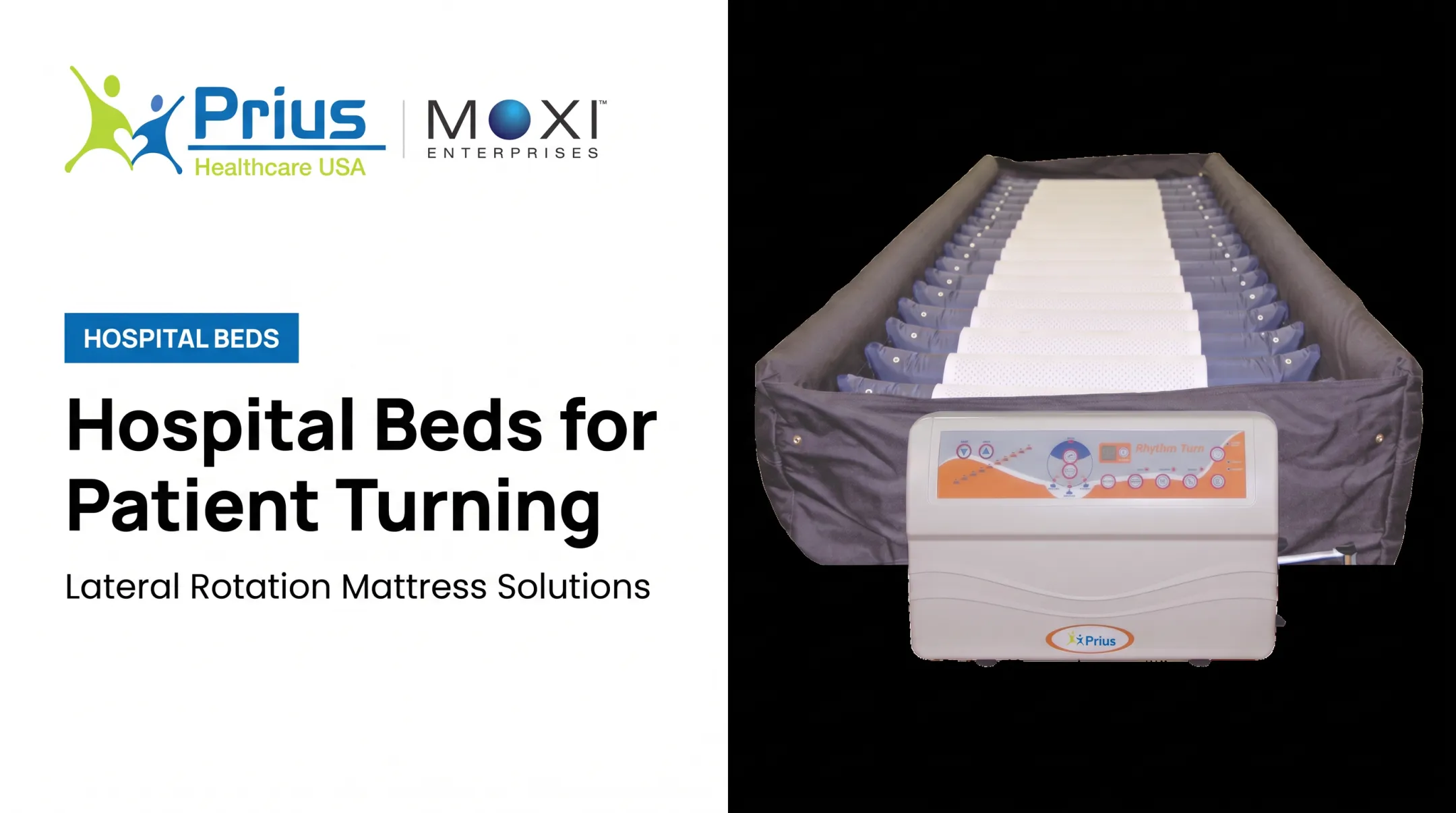
- Alternating-pressure systems (such as a 3:1 cycle): shift support across the body over time
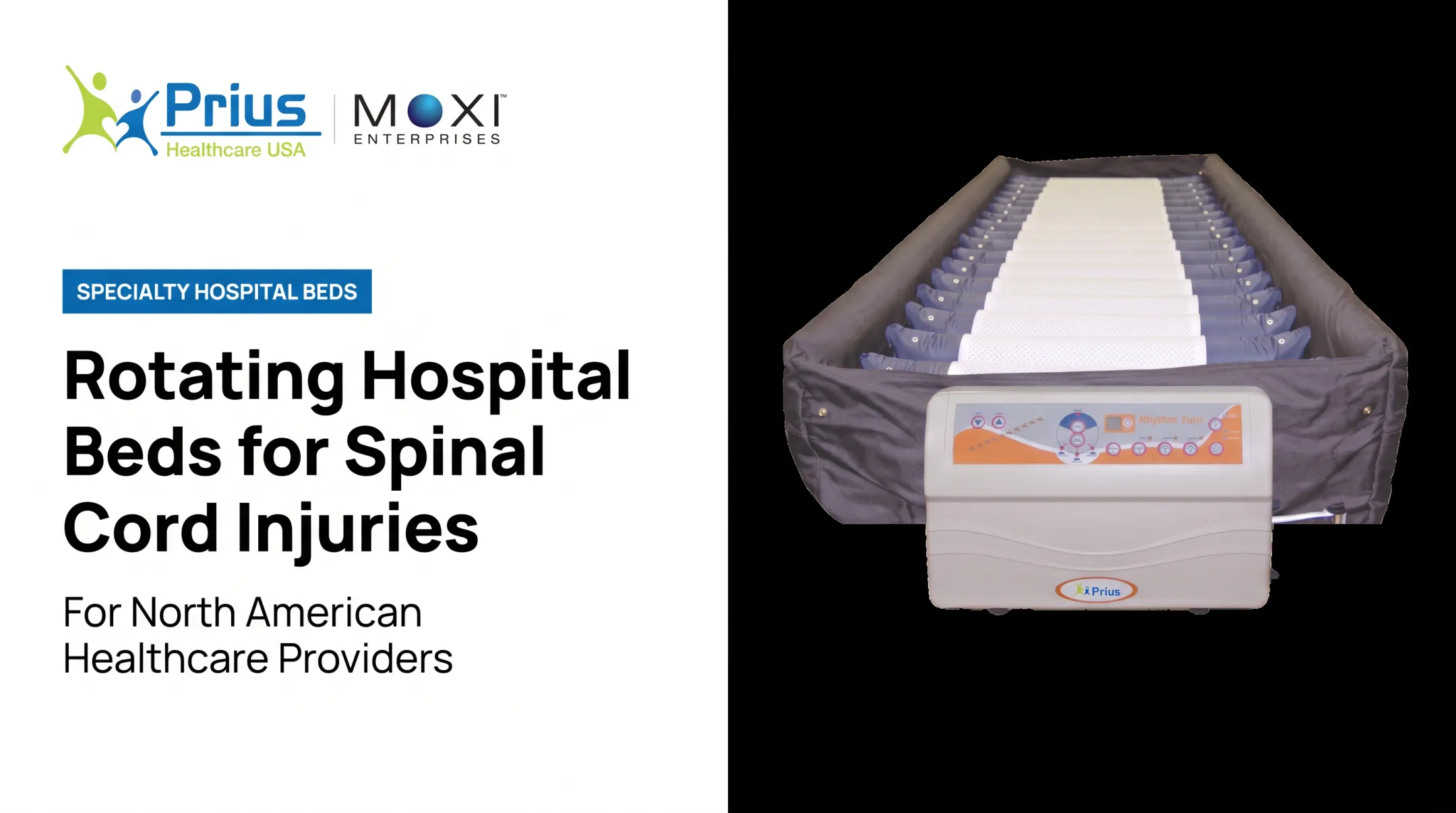
- Low-air-loss surfaces: manage moisture when drainage or incontinence is significant
- Auto-adjusting systems: set pressure from patient height and weight
Families vs. Professional Buyers
Families typically prioritize urgency, comfort, and ease of use. Hospice agencies and HME/DME dealers also need standardized inventory, transport durability, and reliable cleaning protocols between patients.
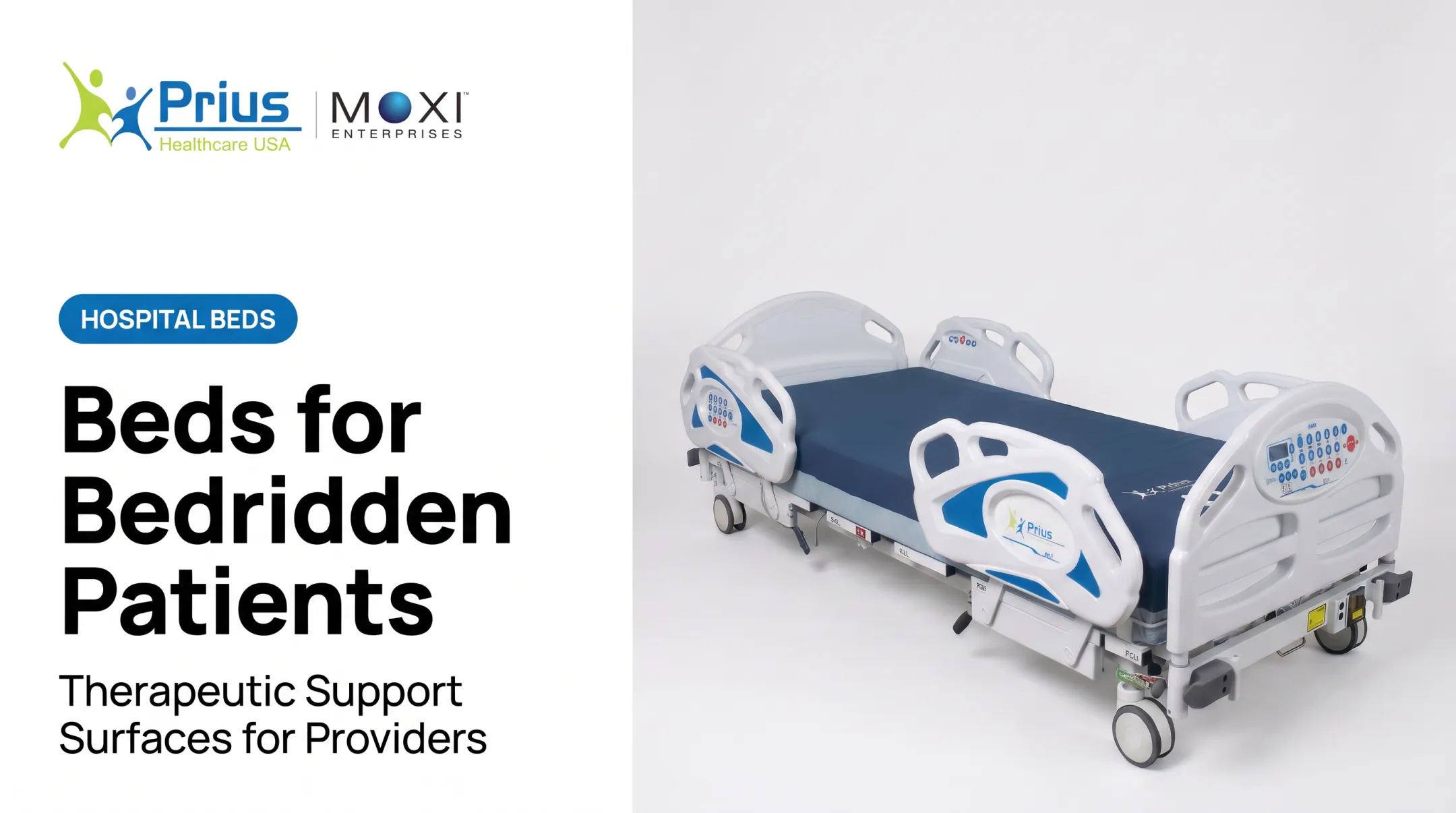
Those priorities shape how each group sources equipment. Prius Healthcare USA supplies specialty hospital bed frames and therapeutic support surfaces (foam, alternating-pressure, and low-air-loss systems) through a U.S. distributor network to hospice agencies, dealers, and facilities.
Prius does not determine hospice eligibility or Medicare coverage; that stays with the hospice provider. Its role is equipment quality, service support, and authorized technician dispatch when repair is needed.
Setting Up and Maintaining a Hospice Bed
Where the bed goes matters almost as much as what bed you choose.
Room Placement
Pick a location with enough clearance for caregivers, transfers, and any oxygen equipment or bedside tables. A living room or larger shared space sometimes works better than a small bedroom simply because there's more room to move around the bed safely.
Home Safety Checklist
- Remove loose rugs and clutter from walking paths
- Secure loose cords and cables
- Add night lighting near the bed and along the path to the bathroom
- Keep the bed clear of heat sources and unobstructed near exits
Questions Before Delivery
Confirm these details before the bed arrives:
- Who assembles the bed
- Who trains you on the controls
- How accessories are delivered
- What to do during a power outage
- Who to call for urgent repairs
A same-day repair contact matters more than it seems until you actually need one.
Maintenance for Professional Users
Agencies and dealers who rotate beds across patients have extra upkeep duties beyond the initial home setup.
- Inspect casters, rails, controls, and mattress covers regularly
- Follow manufacturer cleaning instructions
- Document every service visit before redeploying equipment to a new patient
CMS requires hospices to follow manufacturer maintenance guidance and confirm patients and caregivers can safely operate the equipment before use.
Coverage, Rental, Purchase, and Professional Sourcing Considerations
Coverage isn't universal, and assuming otherwise leads to frustration at delivery time.
What Hospice Typically Covers
The Medicare Benefit Policy Manual states that hospice furnishes equipment related to palliation or management of the terminal illness while the patient remains under hospice care. That's a specific, individualized arrangement, not a blanket guarantee of a particular bed model.

Ask the hospice agency directly:
- Is a bed included, and which model and mattress will be supplied?
- Are delivery and ongoing maintenance covered?
- How quickly can equipment arrive?
- What happens to the bed if hospice care ends?
Rent vs. Buy
Renting and buying serve different priorities:
- Renting lowers upfront cost and usually includes service support
- Buying gives more control over features, appearance, and long-term use
Pricing varies by frame type, mattress, delivery, and service terms. Request a written quote rather than a general estimate.
Total Cost of Ownership for Professionals
For hospice organizations, dealers, and rental fleets, the real cost includes far more than the purchase price:
- Delivery and setup labor
- Cleaning and infection-control procedures between patients
- Repair parts and warranty terms
- Storage, transport, and downtime during service
- Expected redeployment value over the equipment's service life
Request specifications, weight capacity, warranty details, and pickup or return policies in writing before committing to any order.
Hospice agencies, HME/DME dealers, rental fleets, and healthcare facilities can source specialty bed frames and therapeutic support surfaces from Prius Healthcare USA through its U.S. distribution network for product fit and delivery timelines.
Frequently Asked Questions
Will Medicare pay for a hospice bed for home use?
Coverage depends on the hospice benefit and whether your hospice provider considers the bed medically necessary and arranges it under the plan. Ask the agency about current coverage, who supplies the bed, and any noncovered upgrades.
How much does a hospice hospital bed cost?
Hospice-arranged beds usually follow a different cost path than a private rental or purchase. Features, mattress type, delivery, and service change the total, so get a current quote from your supplier instead of using generic price ranges.
Does hospice provide a hospice bed for home use?
Many hospice programs arrange hospital beds and related equipment as part of home care. Availability and included features vary by care plan, provider, payer, and location, so confirm specifics with your agency.
What is a hospice bed and what type does hospice provide?
A hospice bed is an adjustable hospital-style bed used to support comfort and caregiving. The specific model supplied may be semi-electric, full-electric, low-height, bariatric, or paired with a specialty support-surface mattress.
How long will hospice provide a hospital bed?
The bed usually stays in place for as long as the patient needs it under the hospice arrangement. Ask about reassessment, repairs, replacement, and pickup when care needs change or hospice services end.
Why does hospice put the bed in the living room?
Shared spaces often offer more clearance for caregivers, equipment, transfers, and family interaction than a small bedroom. If privacy matters, ask about room dividers, lighting, and clear pathways that still respect the patient's preferences.