Introduction
A bariatric hospital bed that's an inch too narrow doesn't just feel cramped. It can turn a routine transfer into a fall risk, strain a caregiver's back, or leave a mattress hanging over the rails.
Many facilities and home-care buyers struggle with the same problem. Bed listings show different numbers for frame width, mattress width, and overall footprint. It's not always clear which one matters for their room, their patient, or their equipment.
That confusion has real clinical stakes. Bariatric patient-handling research points to sleep surfaces as wide as 50 inches for patients with a BMI above 40 who can't reposition independently, so they can turn safely without caregiver assistance.
This guide breaks down the measurements that actually matter: width, length, height range, sleep-surface dimensions, and weight capacity. We'll cover common U.S. bariatric bed sizes, how to measure your room and access route, mattress and accessory fit, and the specs worth checking before you buy.
Key Takeaways
- Overall bed width, mattress width, and sleep-surface width are three different measurements, not one interchangeable number.
- Weight capacity splits into maximum patient weight and a separate safe working load that includes mattress and equipment.
- Room access, caregiver space, and future patient needs matter as much as raw bed width.
- Mattresses, sheets, rails, and lifts must match the specific bed model, not just a general size category.
- Confirm every figure with the manufacturer, DME supplier, or clinician before ordering.
What Bariatric Hospital Bed Measurements Represent
Bed spec sheets throw a lot of numbers at buyers. Here's what each one describes:
- Overall width and length: the outer footprint of the frame, sometimes measured with rails attached and sometimes without.
- Sleep-surface (mattress deck) width and length: the usable lying area, which is almost always smaller than the overall footprint.
- Deck dimensions: the structural platform the mattress sits on, which flexes at the head and knee sections.
- Mattress thickness: how deep the support surface sits, affecting rail height and entrapment gaps.
- Lowest and highest bed positions: the height range for transfers, fall prevention, and caregiver ergonomics.
- Weight capacity: split between what the patient weighs and what the whole system can safely bear.
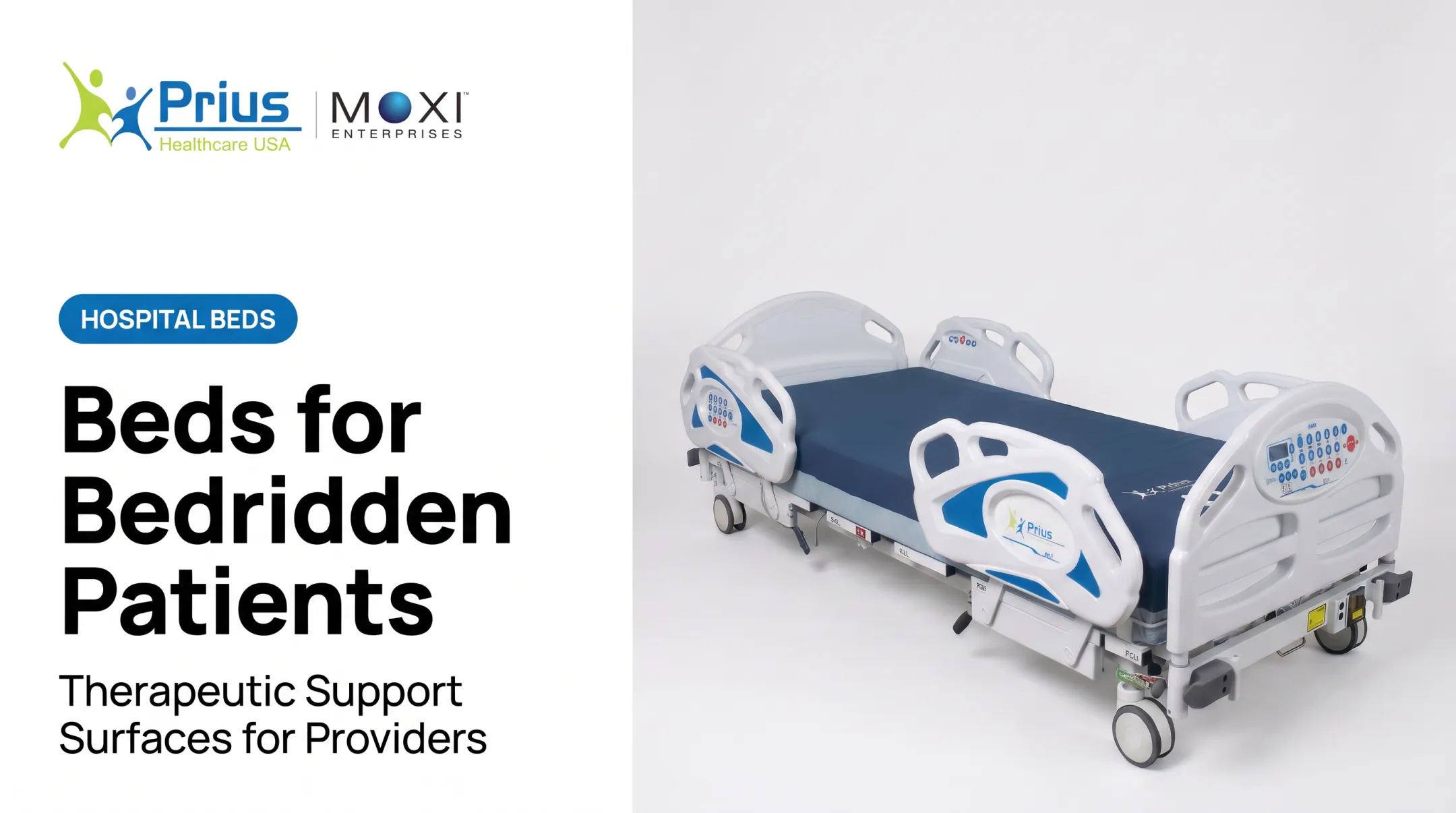
Take the Prius Healthcare USA Ai1 All-In-One Expandable Low Bed as an example. Its overall footprint measures 89.7"L x 39.7"W x 10"H, but its actual sleep surface is 84"L x 35.0"W, nearly 5 inches narrower and shorter than the frame itself. Those same numbers also behave differently depending on whether they are fixed, adjustable, or derived.
Design Parameter vs. Operating Variable vs. Derived Measurement
Not every number on a spec sheet behaves the same way:
- Design parameters are fixed by the manufacturer, such as maximum mattress size.
- Adjustable operating variables change during use, like the Ai1's 10"–31.5" height range.
- Derived measurements are calculated from the base numbers, such as total footprint once rails, an IV pole, or a trapeze bar are added.
Treat these as a single care-system specification rather than isolated figures. A bed that's rated for a 48-inch mattress but has a 52-inch overall width with rails installed needs both numbers checked against your doorway.
Range of Bariatric Bed Measurements and How to Choose a Size
Bariatric beds span a wide range of configurations, and manufacturers define their measurements differently. Here's a comparison of documented U.S. models:
| Model | Overall Width | Overall Length | Height Range | Patient Weight / Safe Working Load |
|---|---|---|---|---|
| Prius Ai1 (expandable) | 35–48 in | 80–88 in | 10–31 in | 550 lb / 600 lb |
| Prius Descend (low bed) | 38 in | 88 in | 2.7–25 in | 375 lb / 395 lb |
| Arjo Citadel Plus | 40.6–52.7 in | 90.2–98.8 in | 14.1–31.5 in* | 1,000 lb / 1,150 lb |
| Baxter/Hillrom Compella | 40–50 in (frame and surface) | Not specified in brochure | Not specified in brochure | 1,000 lb capacity |

*Arjo's printed low-end conversion doesn't reconcile cleanly across metric and imperial units in the source documentation — confirm directly with the manufacturer before treating it as a purchasing limit.
Fixed-Width vs. Expandable Designs
Expandable beds, like the Ai1, step through set widths (35", 42", 48") and lengths (80", 84", 88") using a mattress deck that extends in sections. That flexibility helps when patient needs change. The foot-section panel still has to extend with the deck; pulling the footboard alone will not complete the extension.
Fixed extra-wide beds skip the adjustment mechanism entirely. They're simpler mechanically but commit a room to one footprint permanently.
Length, Height, and Transfer Considerations
Extension options for taller patients don't always change every component. Always verify whether the extension affects the mattress, the deck, or just the frame rails.
Height range matters beyond comfort. The Ai1's AutoTransfer feature levels the deck at a pre-programmed 12-inch transfer height, which supports safer lateral transfers and reduces caregiver reach.
Room and Access-Route Checklist
Before finalizing a bed size, measure the full path it needs to travel:
- Door openings — the 2010 ADA Standards require at least 32 inches of clear width for accessible doorways, measured with the leaf open 90 degrees. This is an accessibility minimum, not proof a specific bed will fit through.
- Hallway turns and elevators — measure the tightest turn, not just the straight run.
- Room footprint at widest configuration — include rails, boards, bumpers, and any attached IV pole or pump holder.
- Working space for caregivers — account for wheelchairs, lifts, cleaning access, and emergency response.
Choosing Between Bed Types
| Factor | Standard-Width Bed | Expandable Bariatric Bed | Fixed Extra-Wide Bed |
|---|---|---|---|
| Best for | Patients near threshold weight | Changing patient needs | Consistently larger patients |
| Room flexibility | High | Moderate | Low |
| Transport ease | Easiest | Moderate | Most difficult |
| Long-term cost | Lower upfront | Higher upfront, adaptable | Fixed investment |
Patient height, hip and shoulder width, ability to turn independently, and transfer method all belong in the decision. Weight alone should not drive it.
Key Technical Properties, Compatibility, and Verification
Capacity Ratings Aren't Interchangeable
Every bariatric bed carries at least two separate weight figures:
- Maximum patient weight: the person using the bed
- Safe working load (SWL): frame total, including mattress, bedding, and accessories
The Ai1 lists a 550-lb patient capacity against a 600-lb frame SWL. The Descend low bed lists 375 lb and 395 lb, respectively. Arjo's Citadel Plus separates 1,000 lb maximum patient weight from a 1,150-lb SWL. None of these figures are interchangeable, and accessories reduce available SWL headroom.

Turning Space and Pressure Redistribution
Bed width isn't only about fit. It also affects how far a patient can reposition without caregiver help.
A peer-reviewed 2017 study on bed size and body mass index found that patients with a BMI above 35 who can't independently reposition may struggle to turn on a centered 36-inch surface without shifting laterally first. The authors recommended a 50-inch surface for patients with a BMI above 40 who need full repositioning assistance.
These are study findings for specific patient groups, not a universal prescription or Medicare rule.
Mattress Compatibility
Mattress fit is a system issue, not a guess. The Ai1 manual requires mattress length and width to match the deck exactly and remain centered on it . An improperly fitted mattress creates gaps that can cause injury.
Documented Prius therapeutic surfaces illustrate the range:
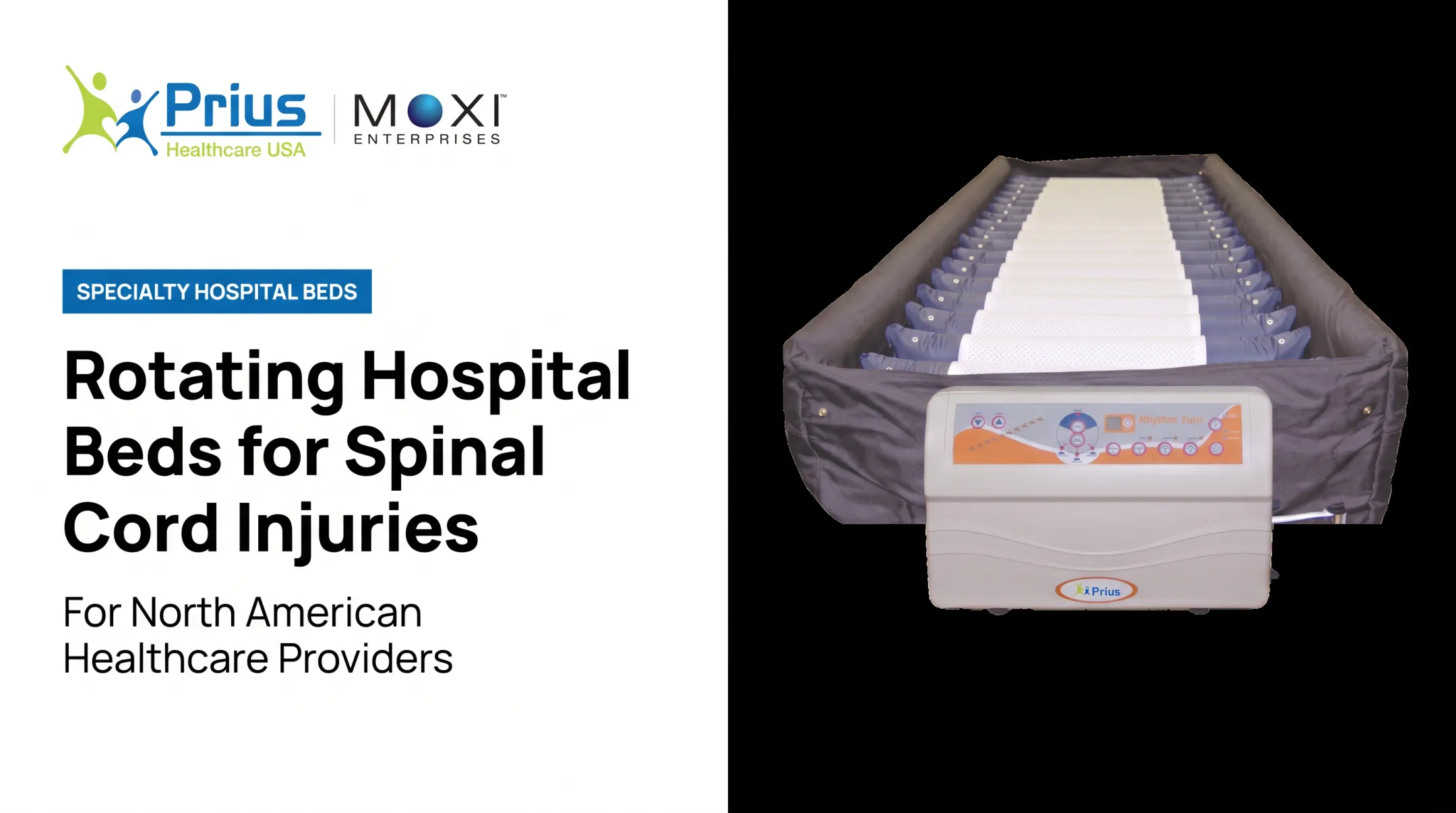
- MOXI Bari Select Air Low Air Loss System: 8" deep; up to 1,000 lb; 42" or 48" widths; 80" or 84" lengths (custom 54" and 60")
- Century Gold Mattress System: alternating pressure with 30 L/min low air loss; 36x80, 42x80, or 48x80 in; 500, 700, or 750 lb
- Ultra Convertible with Serene foam: 36", 39", 42", or 48" widths; 7" height; 600–1,000 lb
A standard twin or twin XL mattress won't flex correctly on an articulating deck or deliver the pressure redistribution a bariatric patient needs.
Sheets and Linens
Fitted sheets need to match the mattress's exact depth and elastic design. A sheet that's too shallow pulls loose during head or knee elevation; one that's too tight can restrict the deck's articulation. Use cotton or cotton-blend sheeting directly against the support surface, with nothing else between patient and mattress.
Accessories and Verification
Rails, trapeze bars, overbed tables, and lifts all need confirmed compatibility with the specific frame , not just the general bed category. The Ai1's optional trapeze, for instance, carries its own labeled load limit and isn't designed to bear the patient's full weight. Accessories not manufactured or provided by the bed's original manufacturer require a compatibility check before use.
Before requesting a quote, document:
- Overall dimensions in every operating and expansion position
- Mattress and deck dimensions, plus maximum mattress thickness
- Weight capacity terminology (patient weight vs. SWL, and what's included)
- Height range, caster size, turning space, and power requirements
- Rail, lift, and sheet compatibility for the exact model
A pre-delivery site assessment or mock layout catches problems a catalog photo never will.
Facilities, dealers, and care teams can consult Prius Healthcare USA to match specialty bed frames and support surfaces to a specific room and patient profile before delivery day.
Implications of Incorrect Sizing and Common Misinterpretations
Getting the size wrong has real consequences:
- Too narrow — restricts repositioning, increases pressure-injury risk, and strains caregivers during turns.
- Too short — forces awkward positioning or leaves feet unsupported.
- Too wide for the room — blocks emergency access and complicates transfers.
- Too little capacity — risks premature wear on motors, casters, and lift mechanisms.
A few common misinterpretations drive these mistakes:
Misconception: the widest or highest-capacity bed is automatically best. A bigger bed often means reduced room access, less patient independence, and higher cost. Match the bed to the patient and space, not the spec sheet ceiling.
Misconception: frame width equals mattress width. The Ai1's frame runs 35–48 inches wide, but sleep surface figures are listed separately. The Descend's overall width is 38 inches, while its mattress is 36 inches. These aren't the same number, and a standard sheet won't automatically fit either one.
Misconception: maximum capacity is a daily operating target. A listed 1,150-lb SWL isn't meant to be run at capacity routinely. It's a ceiling that includes mattress and equipment weight. Check the manufacturer's exact definitions.
Misconception: "48-inch bariatric" means the same thing everywhere. One brand's 48-inch figure might describe the mattress, another's the overall frame. Never assume specs transfer between models.

Conclusion
Bariatric bed sizing comes down to more than a single width number. These factors work together as one system:
- Patient fit and usable sleep surface
- Overall footprint and room clearance
- Height range and weight capacity
- Accessory compatibility
Getting these details right supports safer transfers, better pressure-injury prevention, and equipment that holds up under real daily use.
Before ordering or installing a bed, confirm every specification with the manufacturer, a qualified clinician, or your DME supplier. Spec-sheet numbers only tell part of the story until they're checked against your actual room and patient.
Frequently Asked Questions
What are the Medicare guidelines for bariatric hospital beds?
Coverage depends on current CMS Local Coverage Determination L33820, documented medical necessity, a written order, and supplier eligibility. Weight thresholds apply to specific equipment codes, but they don't establish coverage alone. Check current rules with Medicare, your clinician, and an enrolled supplier.
What size sheets fit a bariatric hospital bed?
Sheet size must match the specific mattress's width, length, and depth, not a generic size category. Standard twin or twin XL sheets shouldn't be assumed to fit. Check the mattress and bed manufacturer's recommendations directly.
What's the difference between a bariatric bed and a regular hospital bed?
Bariatric beds carry higher weight ratings, reinforced frames and motors, and wider mattress options. For comparison, a standard bed's capacity might sit near 500 lb patient weight with 650 lb SWL, while bariatric models like the Ai1 or Arjo Citadel Plus run 550–1,000+ lb.
What qualifies for a bariatric hospital bed?
Qualification depends on documented patient size, weight, mobility, and safety needs rather than one universal weight cutoff. A clinician or qualified equipment provider should assess repositioning ability, transfer method, and skin risk before recommending a model.
What is the best bariatric mattress?
The best mattress depends on the bed's exact dimensions, the patient's weight and skin-risk profile, and pressure-redistribution needs. Options range from foam systems to low-air-loss and alternating-pressure surfaces, but manufacturer-approved compatibility with the specific bed frame matters more than any single "best" label.